Guide
Epoxy Flooring vs Polished Concrete for Interiors
Epoxy is a coating on top; polished concrete is the slab itself. Both work indoors. Here's how to pick.
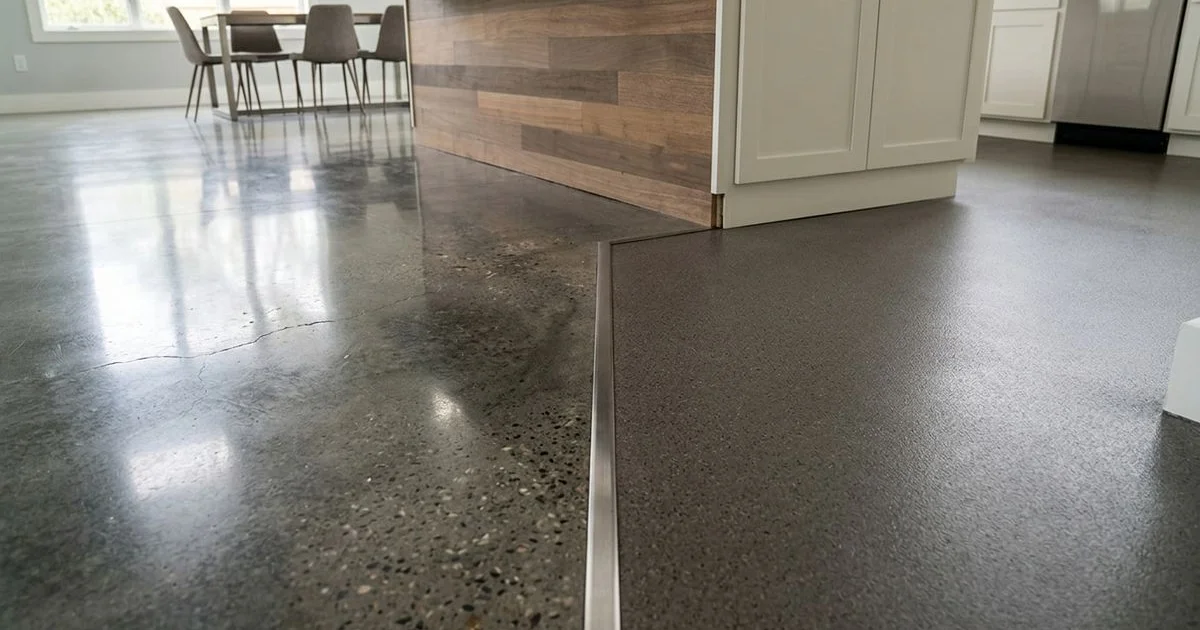
Coating vs. surface — the core difference
Epoxy Flooring is a coating that sits on top of the slab. Polished concrete is the slab itself, mechanically ground and densified to a finished surface. That distinction shapes everything else.
Epoxy gives you a wider color palette, more textural options (flake, quartz, metallic), and can be installed faster. Polished concrete gives you essentially infinite lifespan (no coating to peel) and a more organic, hand-finished look — but takes longer to install and offers a narrower color range.
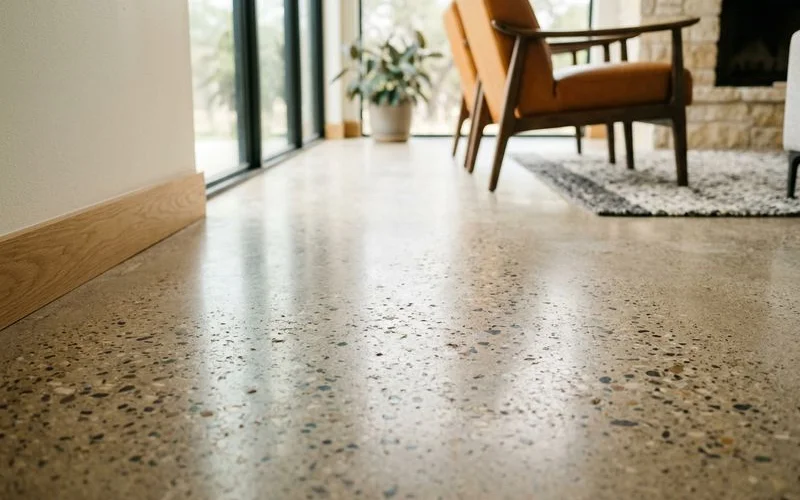
When to pick which
Epoxy when you want a uniform color, want flake or metallic effects, or need a fast install. Also when the slab is too damaged for polish and an overlay would be required anyway.
Polished concrete when you want a slab-as-the-floor aesthetic, when the slab is in good shape, when you want the most durable possible floor, and when you don’t mind the 3- to 5-day install timeline.
Both are excellent choices done right. We do both; we’ll quote both if you’re undecided.
Frequently Asked Questions
Which is more durable? +
Polished concrete — there's no coating to peel. But epoxy is exceptionally durable if properly prepped and topcoated.
Which has more color options? +
Epoxy. Solid colors, flakes, metallics — wider palette. Polished concrete uses dyes and stains, which give beautiful but more limited options.
Cost comparison? +
Polished concrete is usually higher for thin gloss levels and higher again for high-gloss. Epoxy systems range widely depending on chemistry.
Related Service
Learn more about Epoxy Flooring
Durable epoxy flooring for Austin interiors and light commercial spaces.
View Epoxy FlooringRelated Guides
How Long Does an Epoxy Floor Installation Take?
Most residential epoxy installs take 2-3 days. Polyaspartic systems can be done in 1 day. Here's the realistic timeline.
Is Epoxy Flooring Good for Interior Living Spaces?
Yes — modern epoxy systems work beautifully in interior living spaces. The key is matching resin to room and finishing for the look you want.