Decorative Concrete
Epoxy Garage Floor Coatings Built for Texas Heat
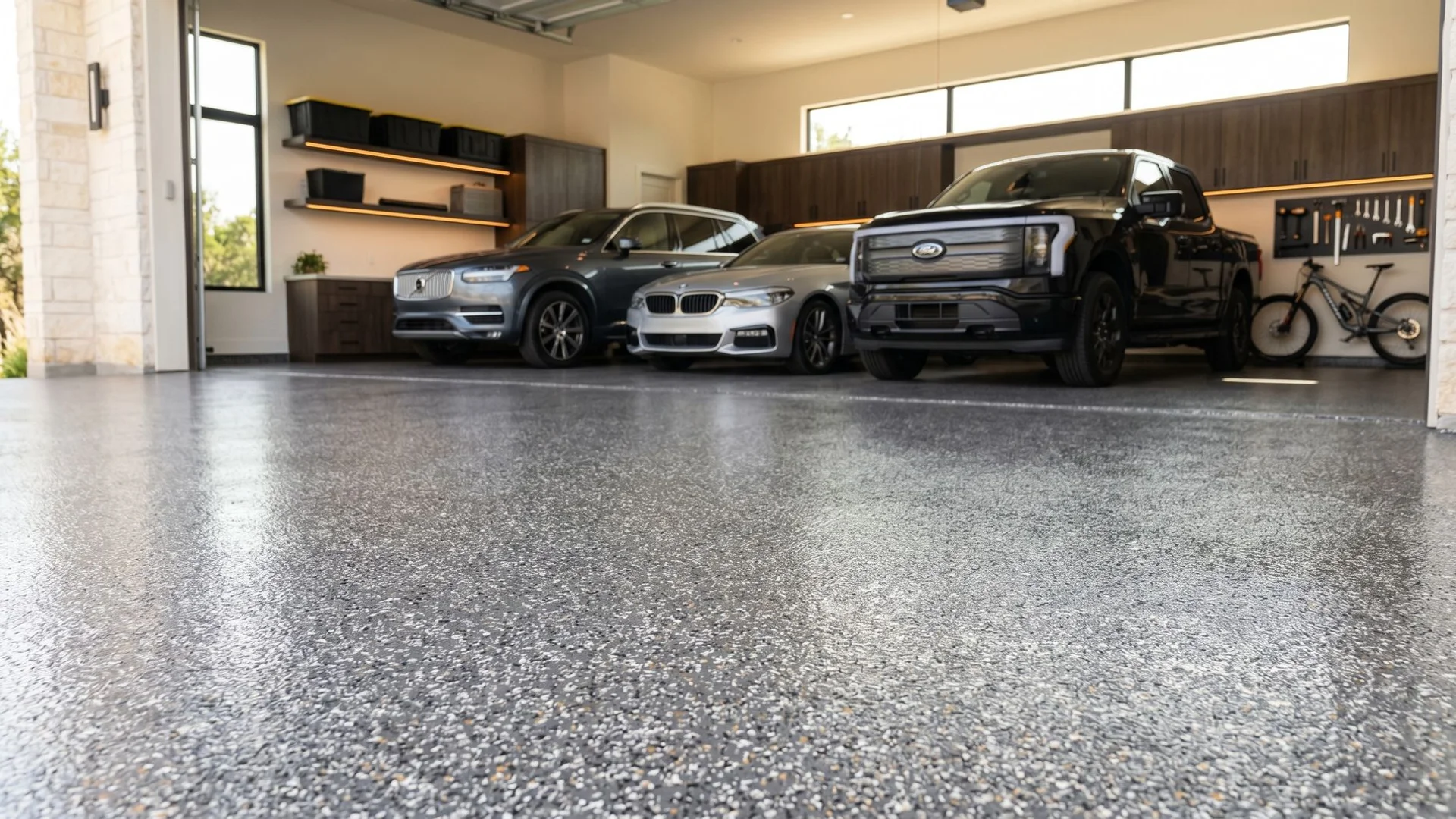
Industrial-grade flake epoxy systems that resist hot tires, chemicals, and Texas heat.
Last Updated:
Our Approach to Garage Coatings
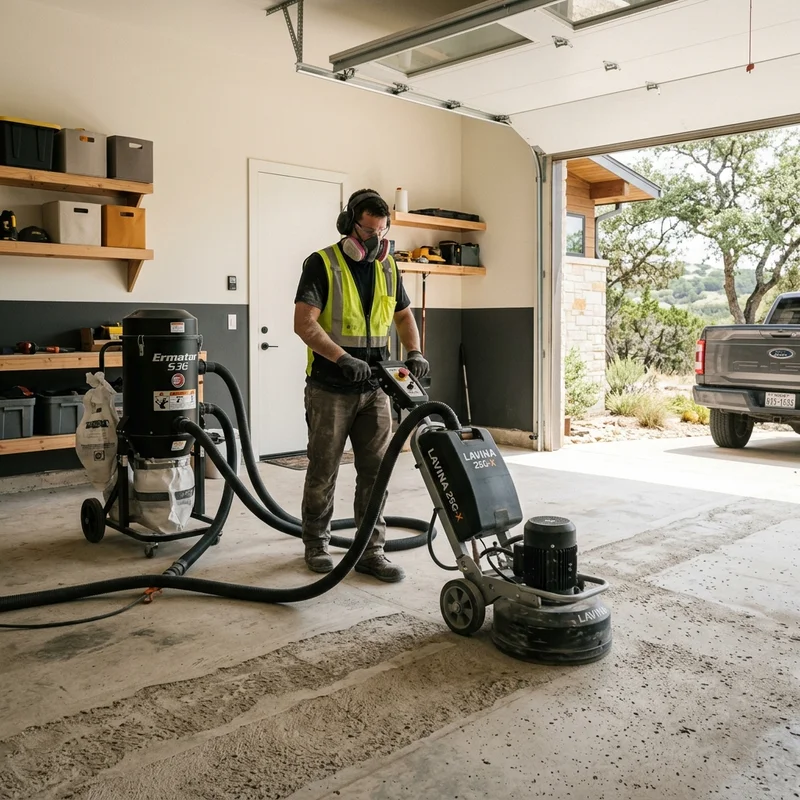
We coat Austin garage floors with industrial flake epoxy and polyaspartic systems that hold up to hot-tire pickup, chemicals, and 100°F summers. Every job starts with diamond grinding - not a quick acid etch - so the coating bonds mechanically and won't peel a season later. Crack repair and moisture mitigation are handled as part of prep.
Why Store-Bought Epoxy Fails in Central Texas
Austin Concrete Finishes has installed industrial flake epoxy garage floors across Austin, TX for 21 years (since 2005). Every project starts with diamond-grinding prep and commercial-grade materials - the same approach that keeps our coatings bonded through Central Texas heat, UV, and clay-soil slab movement.
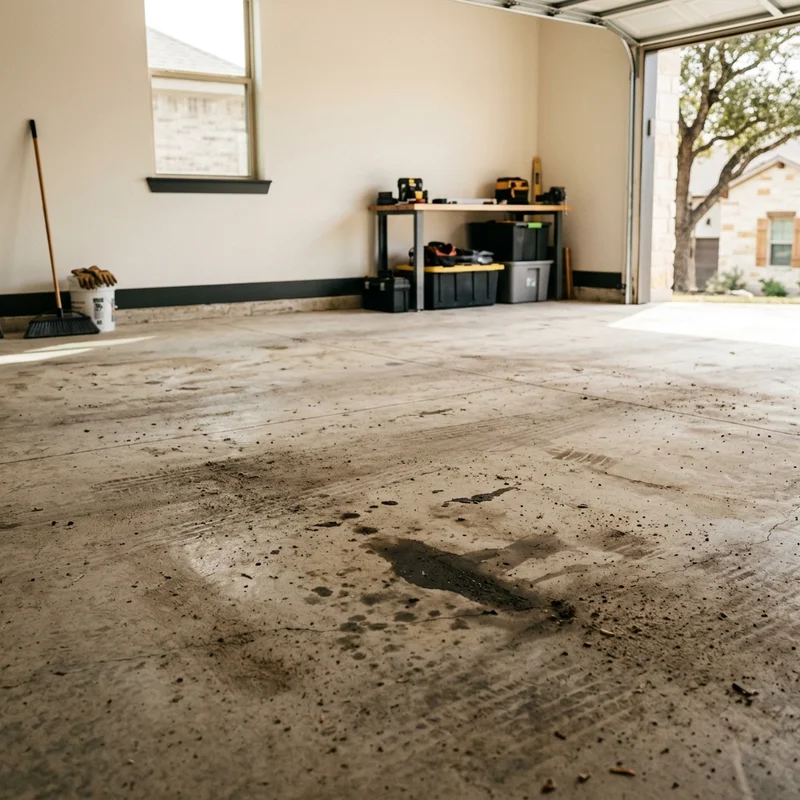
Most failed garage floors share the same backstory: a hardware-store epoxy kit, an acid etch in place of real prep, and a hot Texas summer. The expansive clay soils across Travis and Williamson counties shift slabs constantly, and cheap coatings can’t keep up. Within a year the coating lifts under tires, peels at the edges, and the homeowner is right back where they started.
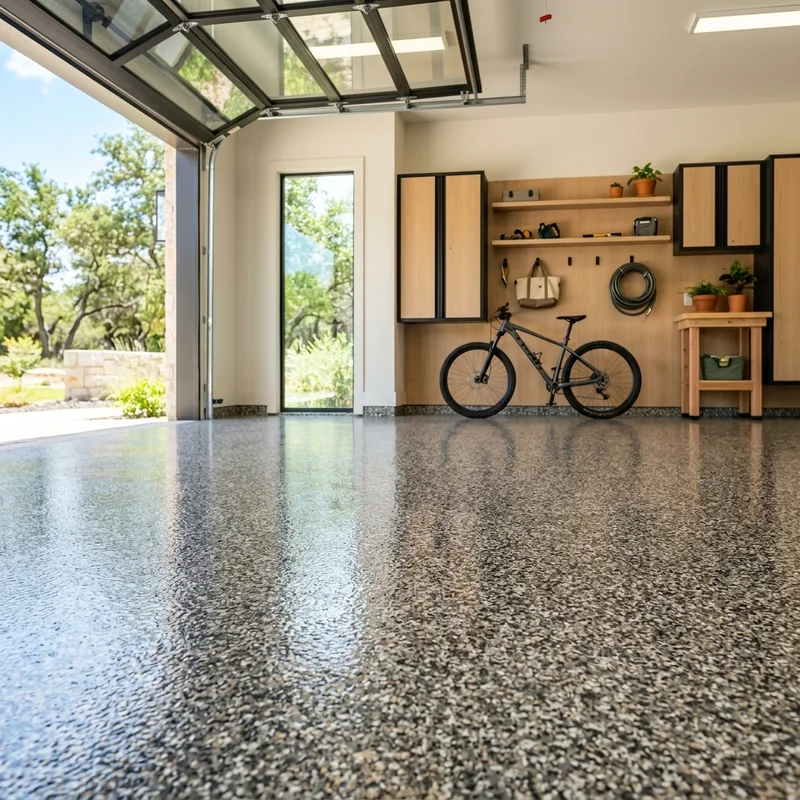
Our flake epoxy systems are different. We diamond-grind the slab to a concrete surface profile (CSP-3 minimum), fix cracks, and apply a moisture vapor barrier where the calcium chloride test calls for it. Then we install an industrial-grade flake broadcast over a polyurea basecoat, topped with a polyaspartic clear coat. The result is a floor that resists hot-tire pickup, shrugs off oil and brake fluid, and stays put through summer after summer.
Custom Flake Colors and Finishes
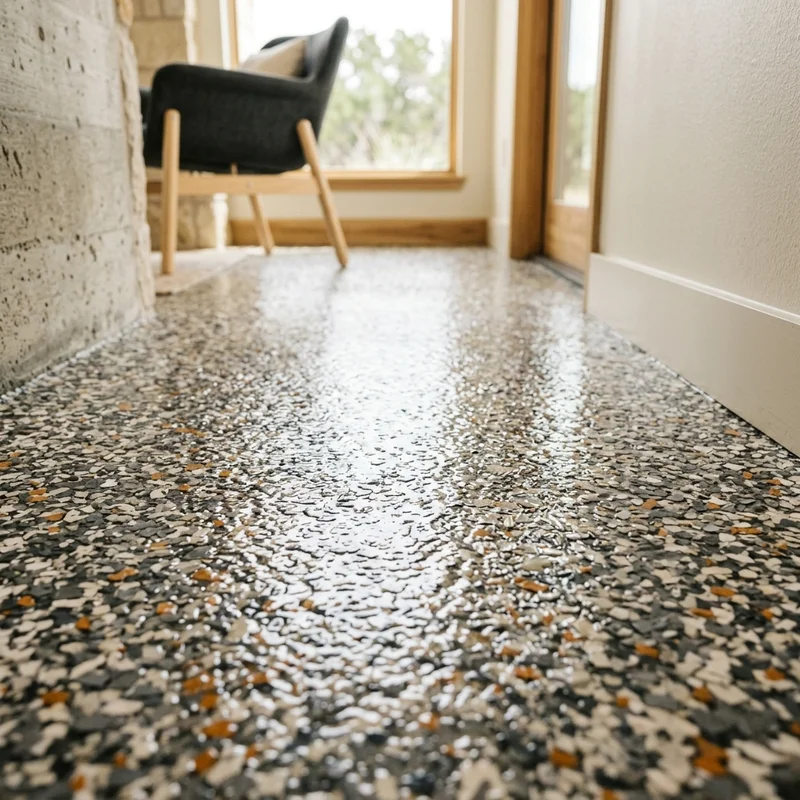
Flake systems aren’t a single look. Choose a subtle gray-and-charcoal blend for a calm, modern garage, a high-contrast Texas-orange flake for a workshop with personality, or a custom mix to match your interior trim. Homeowners in Lakeway and West Lake Hills often request earth-tone blends that complement Hill Country stone exteriors. The flakes also add slip resistance, which is a real upgrade if the garage doubles as a gym, workshop, or play space.
From Single-Bay to Four-Car Garages
Whether it’s a single-bay garage in East Austin or a four-bay shop in Liberty Hill, the system scales. The Austin Concrete Finishes crew coats garages across Round Rock, Cedar Park, and the greater Austin metro with the same industrial-grade process. Larger floors get phased prep and broadcast with HEPA dust containment so the install stays clean and the cure happens evenly. You can usually walk on the floor within 24 hours and park within 72.
How We Compare
| Feature | Typical Provider | Austin Concrete Finishes |
|---|---|---|
| Surface prep | Acid etch or light sand | Diamond grinding to CSP-3 |
| Coating system | Single-coat epoxy kit | Polyurea base + flake broadcast + polyaspartic topcoat |
| Moisture testing | Often skipped | Calcium chloride test on every slab |
| Experience | Varies | 21 years (since 2005) |
| Insurance | Not always carried | Full liability coverage |
What you get
- ✓ Full-broadcast flake systems with custom color blends
- ✓ Diamond-grinding surface prep for a mechanical bond
- ✓ Hot-tire-pickup and chemical resistance
- ✓ Optional polyaspartic topcoat for faster cure and UV stability
Real Work
Project Gallery
What Customers Say
Austin Customers on Their Finished Concrete
"Our 20-year-old garage slab had peeling DIY epoxy. They ground it all back, fixed the cracks, and the new flake floor still looks showroom-clean through two Texas summers."
David R.
Round Rock
"The pool deck stays cool enough to walk on barefoot in August now, and it's no longer slick. Exactly what we hoped for."
Sarah M.
Lakeway
"Polished our downstairs floors to a soft satin sheen. Easy to clean, and they clearly did the prep right. No shortcuts."
Elena G.
West Lake Hills
FAQ
Garage Coatings: Your Questions Answered
How long does an epoxy garage floor last in Texas? +
A properly prepped industrial flake-epoxy floor lasts 10 to 20 years in Texas. A polyaspartic topcoat extends that further by blocking UV and resisting heat.
Why does DIY epoxy peel? +
DIY kits are thin and rely on an acid etch that doesn't really profile the slab. Without diamond grinding the coating has nothing mechanical to grab, so hot tires and heat lift it off.
Can you coat a stained or oily garage floor? +
Yes - we degrease, then diamond-grind back to sound concrete before any coat goes down. Oil that's soaked deep gets sealed before primer.
How much does a garage floor epoxy coating cost in Austin? +
Pricing is custom and project-based, depending on square footage, slab condition, and finish chosen. We offer free same-day quotes for most jobs (2026 rates).
How long does the installation take? +
Most single-bay and two-car garages are finished in one to two days. You can walk on the floor within 24 hours and park on it within 72 hours.
Related Services
Polyaspartic Coatings
Fast-curing, UV-stable polyaspartic and polyurea coatings.
Learn more →Epoxy Flooring
Durable epoxy flooring for Austin interiors and light commercial spaces.
Learn more →Peeling Epoxy Floor Repair
Grind back and recoat failed, peeling, or bubbling epoxy floors - done right.
Learn more →Guides
Garage Coatings Guides & Answers
Do I Need to Grind My Garage Floor Before Epoxy?
Yes — diamond grinding is what gives epoxy a mechanical bond and stops the early peeling that ruins DIY garage floors in Texas.
Read guide →Flake Epoxy vs Solid-Color Garage Coatings
Flake systems hide imperfections and add slip resistance; solid color is simpler. See which garage floor coating fits your Austin home.
Read guide →How Long Do Epoxy Garage Floors Last in Texas Heat?
A properly prepped epoxy garage floor lasts 10-20 years in Texas. See what shortens it and how polyaspartic extends it.
Read guide →What Is Hot-Tire Pickup and How Is It Prevented?
Hot-tire pickup is when a parked tire pulls coating off the floor. The fix is industrial prep, the right primer, and a polyaspartic topcoat.
Read guide →Will Epoxy Hide Cracks and Stains in My Garage Slab?
Properly prepped epoxy hides minor surface cracks and old oil stains. Major cracks need repair first — here's how to tell the difference.
Read guide →Epoxy vs Polyaspartic for Austin Garage Floors
Epoxy bonds and colors; polyaspartic protects and cures fast. Most Austin garages benefit from both — here's why.
Read guide →Professional Epoxy vs DIY Garage Floor Kits
Hardware-store kits are 1-part epoxy with acid-etch prep. Pro systems are 2-part epoxy on diamond-ground concrete. Different floors, different lifespans.
Read guide →What Does an Epoxy Garage Floor Cost in Austin?
Professional epoxy garage floors in Austin run roughly $5-$10/sq ft for industrial systems. Slab condition, finish, and topcoat drive the range.
Read guide →Ready to Quote Your Garage Coatings?
Send a photo of the slab — we usually have a real number back to you the same day.