Guide
Stamped Overlay vs Stamped (Poured) Concrete
Overlays stamp over existing slabs. Poured stamps go in fresh concrete. Both look great — here's how to choose.
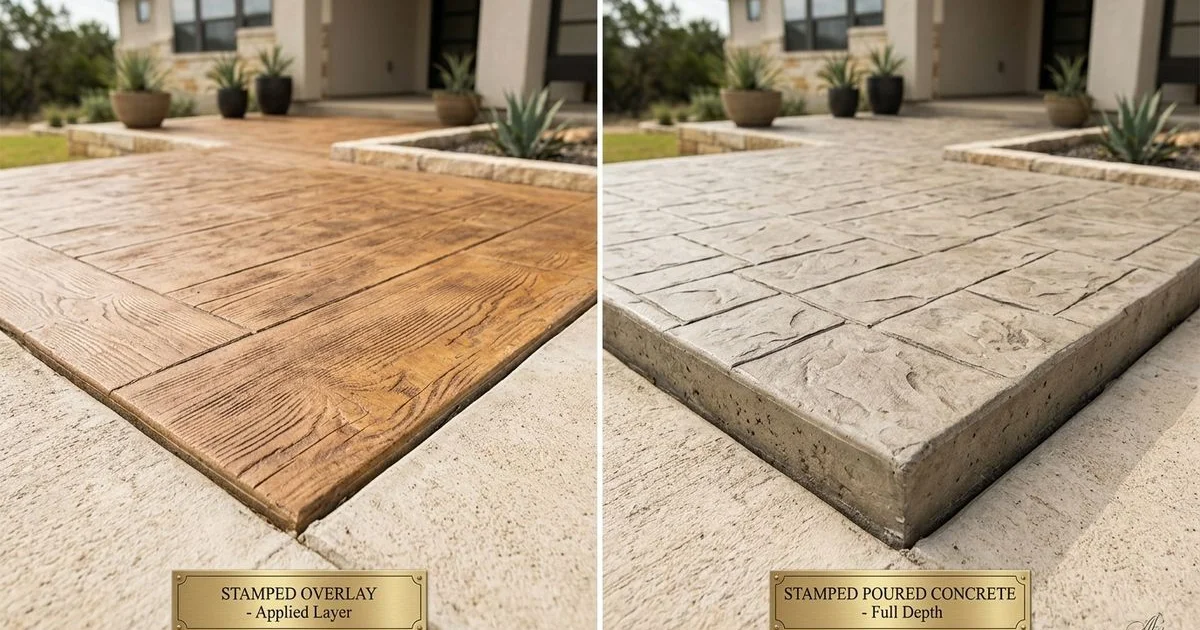
Same finish, different starting point
Stamped Concrete Overlays and stamped poured concrete deliver the same visual result. The difference is the starting substrate: overlay starts with an existing slab, poured starts with fresh concrete.
For homeowners with an existing patio, driveway, or walkway, overlay is almost always the right call — you save the demolition, the new pour, the curing time, and (often) significant cost. The finish looks the same as if you’d torn out and replaced.
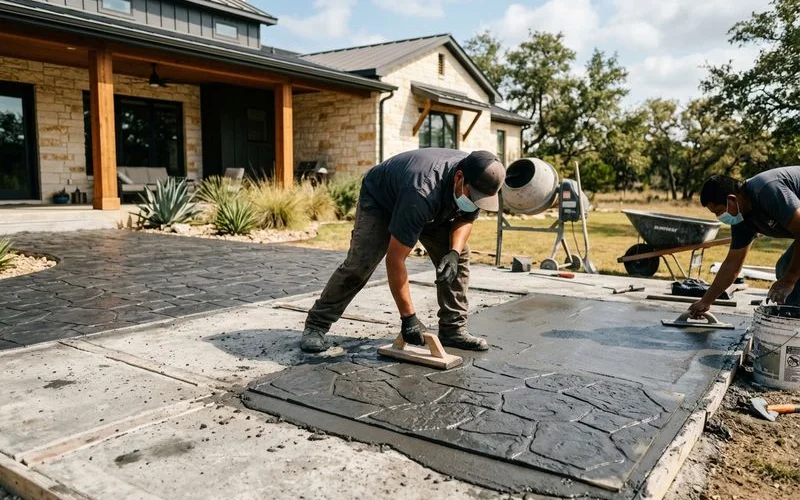
When fresh-poured is the right call
Three scenarios where poured wins:
- No slab exists yet (new construction, new patio location).
- The slab is too damaged for resurfacing (foundation work needed anyway).
- The geometry is changing (different size or shape than existing).
For everything else — and that’s most retrofit projects — overlay is faster, cheaper, and produces the same finish. We don’t do fresh pours; we do overlays. If you need a fresh pour, we’ll refer you to a flatwork contractor.
Frequently Asked Questions
Does overlay look as good as poured? +
Yes — same mats, same colors, same techniques. The visual result is essentially identical.
Which is cheaper? +
Overlay is cheaper when an existing slab is in place. Poured is cheaper when you're starting from scratch (no slab demo).
Which lasts longer? +
Both last decades when properly installed and sealed. The substrate matters more than the method.
Related Service
Learn more about Stamped Concrete & Overlays
Stone, brick, and wood looks stamped over your existing concrete.
View Stamped Concrete & OverlaysRelated Guides
How Stamped Overlays Mimic Stone, Brick, and Wood
Stamp mats press patterns into wet polymer-modified overlays, then color and antiquing agents create realistic stone, brick, or wood looks.
Will a Stamped Overlay Get Too Hot for a Patio?
Light-color stamped overlays with the right sealer stay barefoot-friendly. Dark colors get hot — choose wisely for Texas patios.