Guide
Precast vs Cast-in-Place Concrete Countertops
Precast is shop-built then installed. Cast-in-place is built on-site. Each fits different countertop situations.
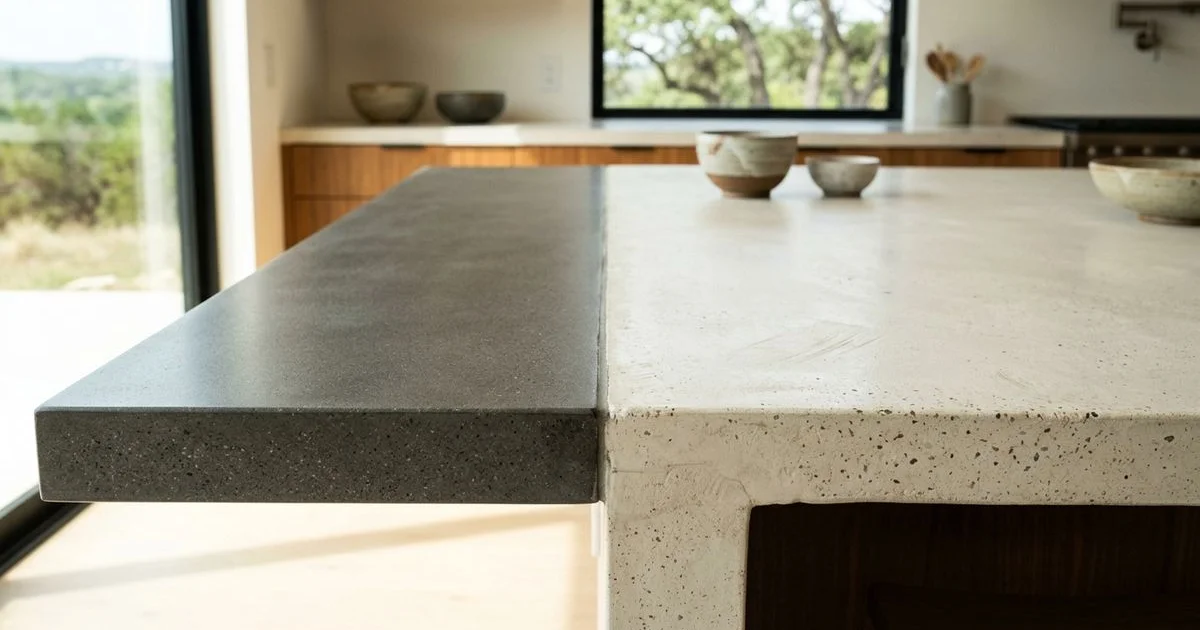
Where the slab is born matters
Precast Concrete Countertops are built in the shop, cured under controlled conditions for weeks, then transported to the home for install. The shop process gives the best finish control: consistent thickness, smooth surface, refined edges.
Cast-in-place countertops are built in position. The form is built on the cabinets, concrete poured into it, then ground and polished on-site. The big advantage is no seams over very long runs.
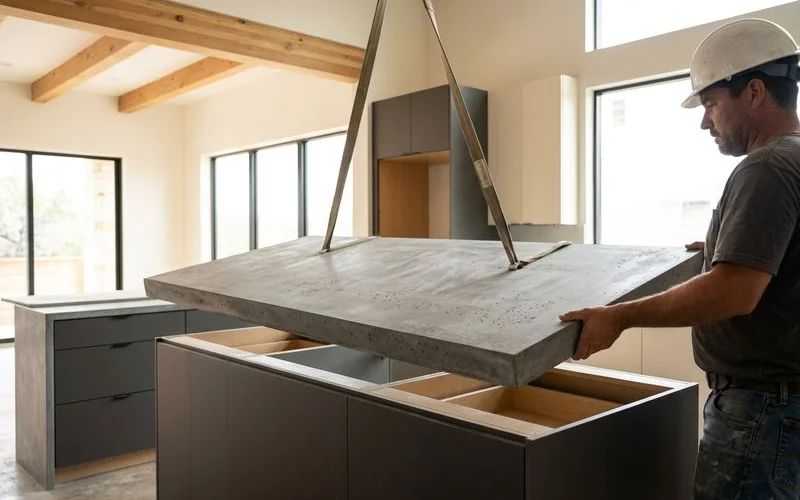
When to use which
Use precast for:
- Standard kitchen countertops (most cases)
- Vanities
- Smaller bar tops
- Spaces where finish quality matters most
Use cast-in-place for:
- Long bar tops over 12 feet
- Outdoor kitchen islands
- Complex shapes that are hard to transport
- Floor-poured surfaces (rare for countertops)
Most of our installs are precast — the finish control and reliability of shop work is better for typical residential kitchens. We discuss the right approach during the quote based on dimensions, location, and what matters most to you.
Frequently Asked Questions
Is precast better? +
For most residential kitchens, yes — better finish control. Cast-in-place is better for long bar tops or outdoor surfaces.
Are there seams in precast? +
Yes, at slab joints. Modern installs minimize them with seamed joints or epoxy-filled lines.
Which costs more? +
Roughly comparable. Precast labor is in the shop; cast-in-place labor is on-site. Material costs are similar.
Related Service
Learn more about Concrete Countertops
Custom, food-safe-sealed concrete countertops - precast or cast-in-place.
View Concrete CountertopsRelated Guides
Are Concrete Countertops Durable and Stain-Proof?
Properly sealed concrete countertops are exceptionally durable and stain-resistant. Care is simple — here's what to expect.
Concrete vs Quartz and Granite Countertops
Concrete is custom and one-of-a-kind. Quartz is consistent. Granite is natural stone. Each fits different priorities.
What Do Concrete Countertops Cost in Austin?
Custom concrete countertops in Austin run $80-$150 per square foot, comparable to mid-tier quartz with full customization.