Guide
Resurfacing vs Replacing Your Concrete
Resurface for cost and speed when the slab is structurally sound. Replace when the slab is moving or unsalvageable. Here's how to tell.
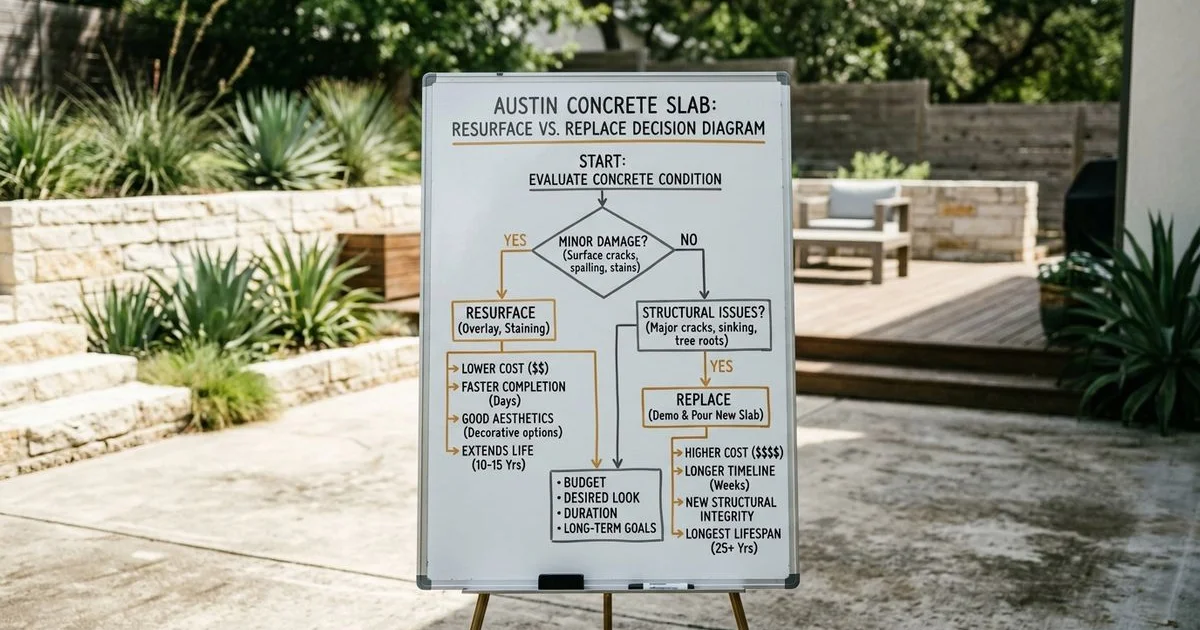
Three questions decide it
For most Austin homeowners, three questions answer the resurface-vs-replace decision:
- Is the slab structurally sound? Hairline cracks and surface wear are fine. Active settlement, lifting corners, or wide widening cracks are not.
- What’s the surface look you want? Decorative finishes — stained, polished, stamped, overlay — all work on resurfaced slabs.
- What’s the budget? Resurfacing is typically 30-50% of replacement cost.
If the slab passes the structural check, Concrete Resurfacing is almost always the better economic choice and produces a better-performing surface than fresh concrete on the same expansive clay.
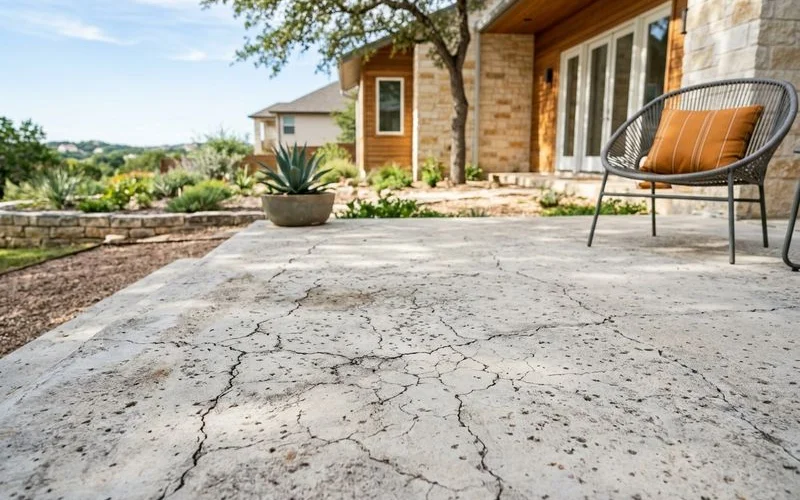
When to replace
Three real reasons to replace:
- The slab is structurally failing (settlement, heave, widening cracks). Even then — fix the foundation first, then decide.
- The slab is too thin or in the wrong place (an old narrow walkway when you want a wide patio).
- A complete redesign is happening (new layout, new size, new drainage). Replacement is the right call when the geometry changes.
For everything else — cracked driveways, worn patios, tired pool decks, scaled garage floors — resurfacing wins on cost, speed, and long-term durability. We’re happy to evaluate honestly.
Frequently Asked Questions
What's the cost difference? +
Resurfacing typically runs 30-50% of replacement cost — and saves the demolition headache.
Will replacement last longer? +
Not necessarily. A new pour on Central Texas clay cracks just like the old one. A resurfaced slab with crack-bridging often outlasts a fresh slab on the same soil.
Who decides? +
We evaluate the slab during the quote and tell you straight which path fits. If the slab is moving structurally, we recommend foundation work first.
Related Service
Learn more about Concrete Resurfacing
Restore cracked or worn driveways, patios, and pool decks with durable overlays.
View Concrete ResurfacingRelated Guides
Can Cracked Concrete Be Resurfaced Instead of Replaced?
Usually yes — if the slab is structurally sound. Resurfacing handles surface cracks at a fraction of replacement cost.
How Thick Is a Concrete Resurfacing Overlay?
Most resurfacing overlays are 1/8 to 1/2 inch thick. Self-levelers can build deeper. Stamped overlays add another 1/4 to 3/8 inch.
Why Central Texas Clay Soil Cracks Slabs (and the Fix)
Expansive clay moves with every wet-dry cycle. Surface cracks are inevitable. Crack-bridging overlays handle the movement without telegraphing through.