Guide
Which Concrete Cracks Can Be Repaired vs Replaced?
Hairline and stable surface cracks repair fine. Widening or structural cracks need foundation work first.
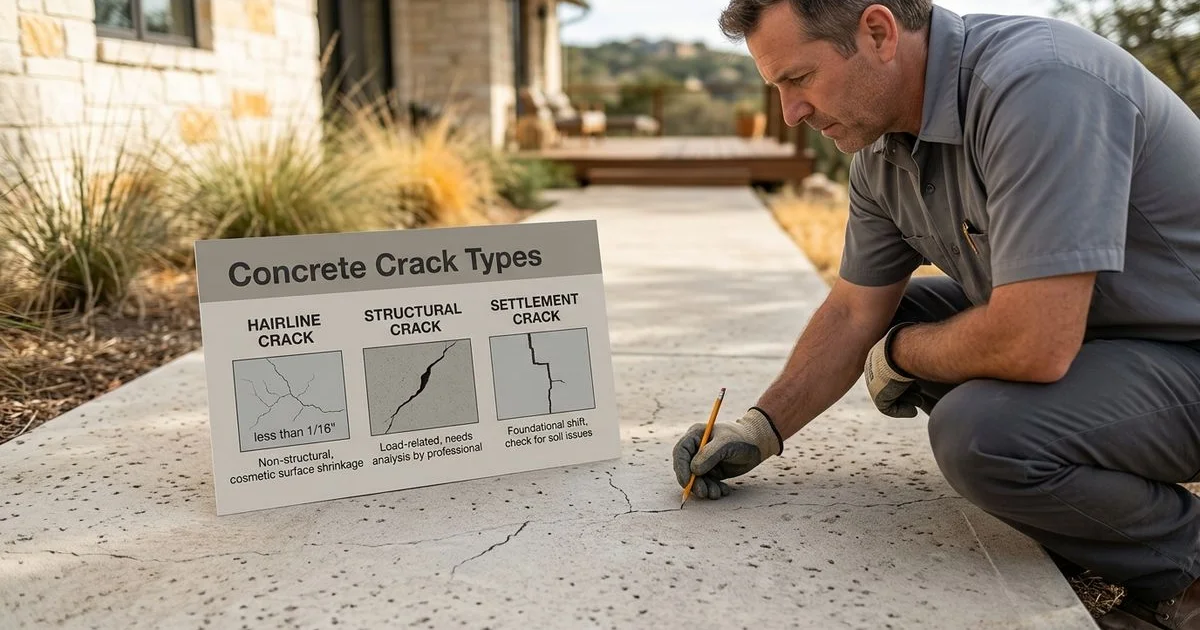
Hairline and surface cracks are routine
Most concrete cracks are surface-level cosmetic issues, not structural. Hairline cracks (less than 1/16”), shallow surface cracks, and stable wider cracks are all candidates for Cracked Concrete Repair as part of resurfacing or coating prep.
The technique is:
- Chase the crack with a saw or grinder to widen it slightly
- Fill with polymer-modified patch material
- Bridge with an elastomeric membrane
- Resurface or coat on top
The result is a fix that doesn’t telegraph through the new finish.
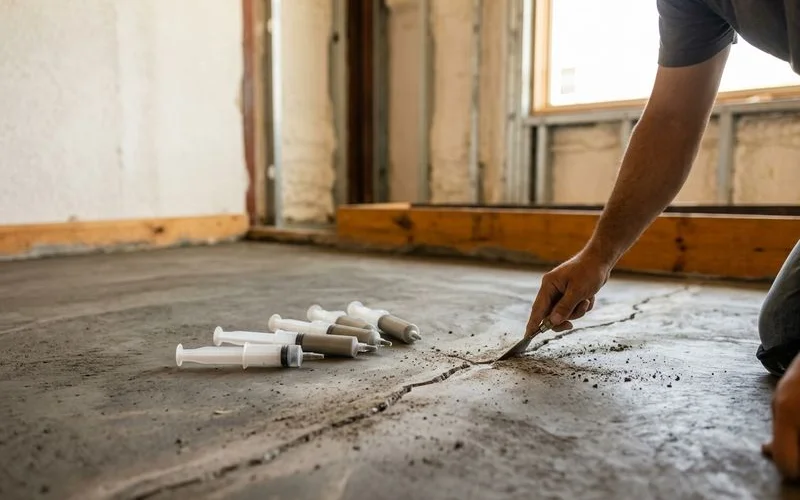
When the slab is the problem
Some cracks indicate something bigger — and need different intervention:
- Widening cracks (getting bigger over months) — active movement
- Cracks with offset edges (one side higher than the other) — settlement
- Cracks through slab AND walls — foundation issue
- Cracks with water flowing through — drainage or foundation
- Wide structural cracks (over 1/4”) — typically structural
For these, we recommend a foundation contractor before any decorative finishing work. We’re upfront about scope: surface crack repair is in our wheelhouse, structural slab leveling and pier work is not. We’ll diagnose during the quote and tell you straight.
Frequently Asked Questions
How wide is too wide for repair? +
Over 1/4 inch wide, or widening, is concerning. Often signals structural movement underneath.
What about cracks through both the slab and into walls? +
That's foundation. Foundation contractor first, then we resurface.
Will a repair crack again? +
Not if it's bridged with an elastomeric membrane. Rigid patches do come back.
Related Service
Learn more about Cracked Concrete Repair
Surface crack repair as part of resurfacing and coating prep (non-structural).
View Cracked Concrete Repair