Decorative Concrete
Fix Cracked Concrete in Austin Before Your Next Coating
Surface crack repair as part of resurfacing and coating prep (non-structural).
Last Updated:
Our Approach to Crack Repair
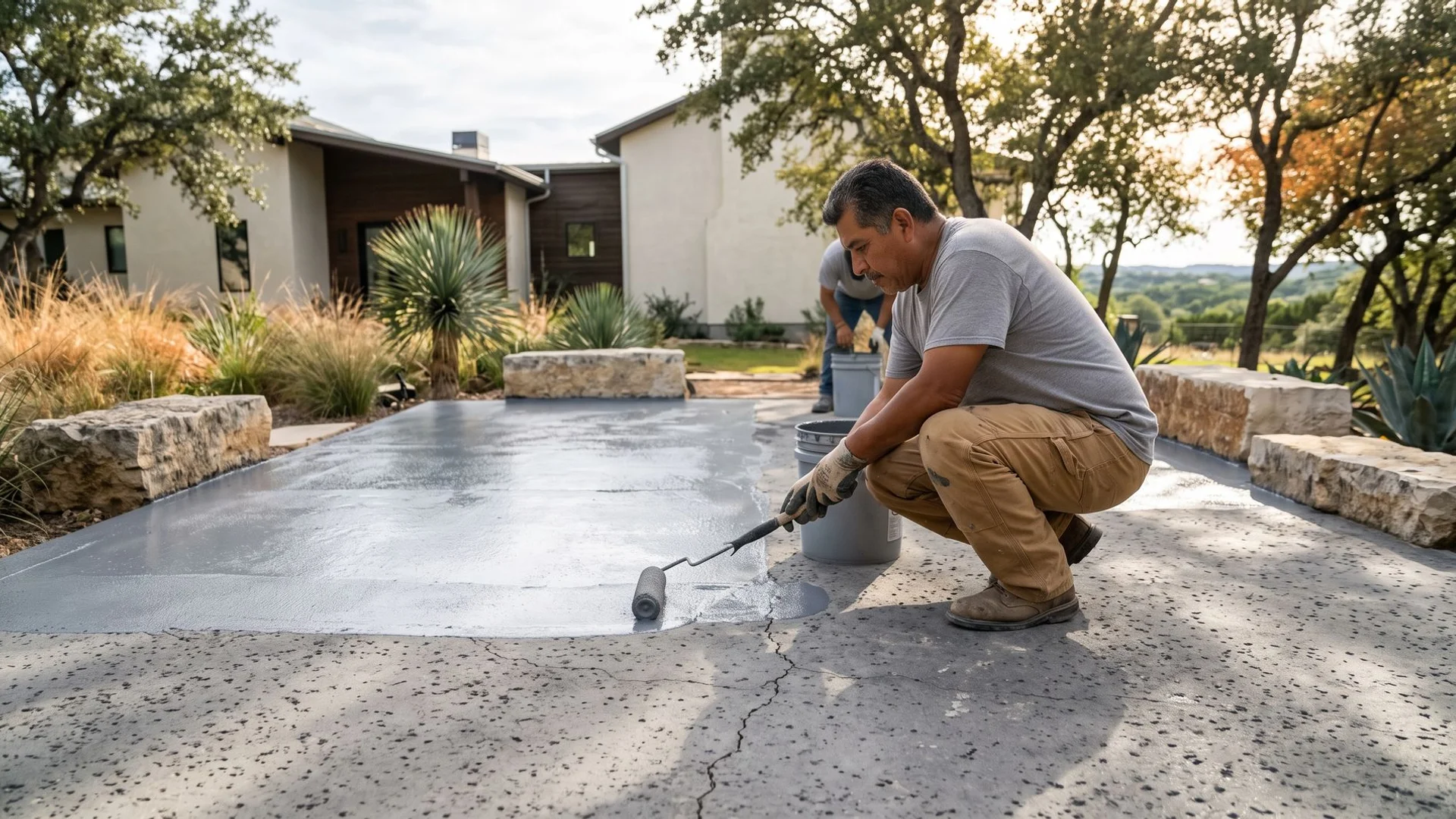
We repair surface cracks as part of resurfacing and coating prep, and address the Central Texas clay-soil movement behind them with crack-bridging membranes. To be clear about scope: we do finishing-side crack repair, not structural leveling, mudjacking, or pier work.
How We Repair Surface Cracks for Lasting Finishes
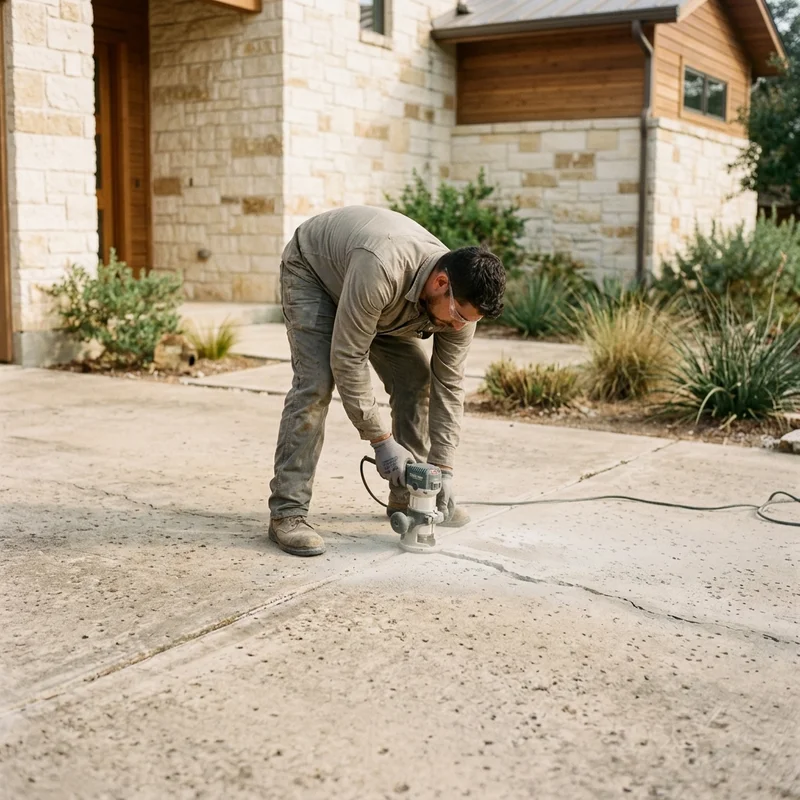
At Austin Concrete Finishes, most of our crack repair happens as prep for resurfacing or coating. With 21 years of hands-on experience since 2005, we route out the crack, fill with polymer-modified patch material, then bridge with an elastomeric membrane so the new overlay or coating moves with the slab instead of cracking on top of it. We handle this prep work across the Austin metro, from Dripping Springs to Round Rock.
Why Central Texas Clay Soils Cause Slab Cracks
Expansive clay soil moves with every wet-dry cycle across the Austin metro and Hill Country. That movement telegraphs into surface cracks on garage floors, patios, pool decks, and interior slabs over time. The fix isn’t to ignore the cracks (they come back) or to pour a rigid topping (it cracks too). Austin Concrete Finishes uses crack-bridging membranes that let the slab move while keeping the finish intact.
What We Do and Don’t Do
We do finishing-side crack repair. We don’t pour new slabs, don’t do mudjacking, don’t do pier work or structural leveling. If your slab in Lakeway, Cedar Park, or anywhere in the Austin area is settling or heaving, you need a foundation contractor before we resurface. We’ll tell you that on the quote - straight, no upsell.
What you get
- ✓ Hairline and surface crack repair
- ✓ Elastomeric crack-bridging membranes
- ✓ Clay-soil movement context
- ✓ Honest scope limits (no structural leveling)
Real Work
Project Gallery
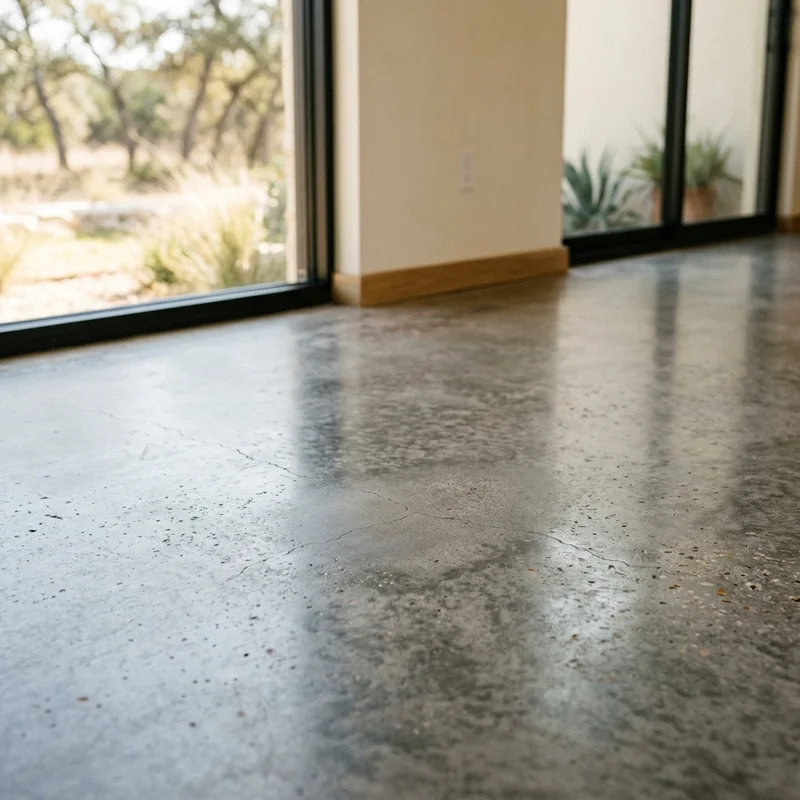
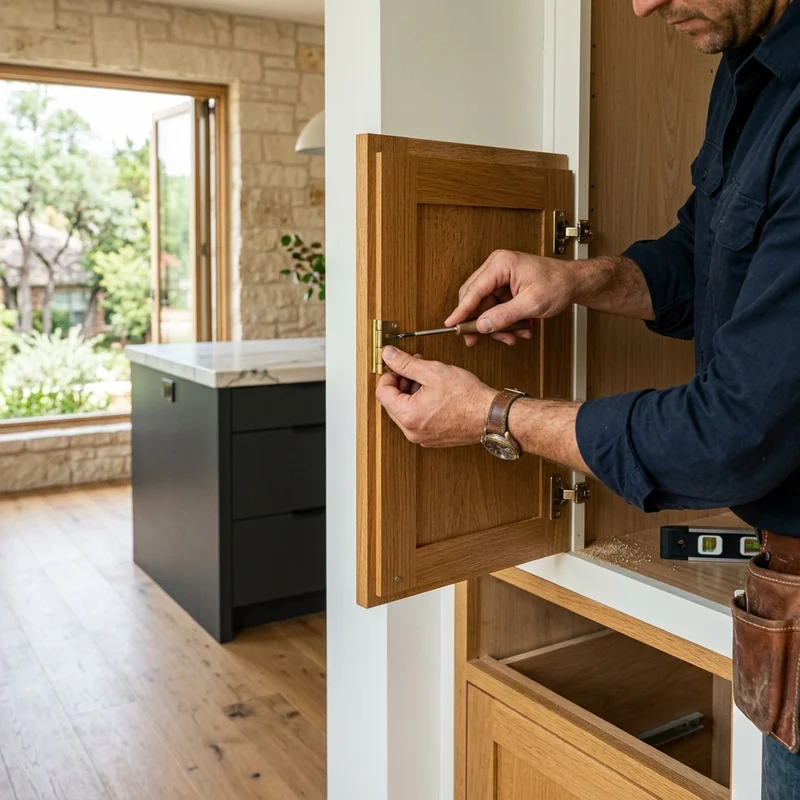
What Customers Say
Austin Customers on Their Finished Concrete
"Our 20-year-old garage slab had peeling DIY epoxy. They ground it all back, fixed the cracks, and the new flake floor still looks showroom-clean through two Texas summers."
David R.
Round Rock
"The pool deck stays cool enough to walk on barefoot in August now, and it's no longer slick. Exactly what we hoped for."
Sarah M.
Lakeway
"Polished our downstairs floors to a soft satin sheen. Easy to clean, and they clearly did the prep right. No shortcuts."
Elena G.
West Lake Hills
FAQ
Crack Repair: Your Questions Answered
Will the crack come back? +
With current elastomeric membrane systems (2026), surface cracks above the membrane should not telegraph through. But if the slab is structurally moving (settling, heaving), cracks will recur until that movement is addressed.
Do you do structural leveling? +
No. We do finishing-side crack repair, not mudjacking, pier work, or slab leveling. If your slab needs structural work, you'll need a foundation contractor first.
How do I know if my concrete cracks need professional repair? +
Hairline surface cracks are mostly cosmetic and won't affect a coating or overlay. Cracks wider than 1/4 inch, lifting edges, or uneven settlement point to structural movement that needs a foundation contractor first. We assess every slab on-site and give you an honest answer before quoting.
Related Services
Concrete Resurfacing
Restore cracked or worn driveways, patios, and pool decks with durable overlays.
Learn more →Concrete Overlays & Micro-Toppings
Thin micro-toppings and self-levelers for smooth, modern concrete finishes.
Learn more →Coating Removal & Concrete Grinding
Industrial coating removal and diamond grinding to prep concrete for a new finish.
Learn more →Guides
Crack Repair Guides & Answers
How Clay-Soil Slab Movement Causes Cracks in Austin
Central Texas expansive clay moves with every wet-dry cycle. Surface cracks are the symptom. Crack-bridging finishes handle it.
Read guide →Which Concrete Cracks Can Be Repaired vs Replaced?
Hairline and stable surface cracks repair fine. Widening or structural cracks need foundation work first.
Read guide →Ready to Quote Your Crack Repair?
Send a photo of the slab — we usually have a real number back to you the same day.