Guide
Is My Existing Slab a Good Candidate for Polishing?
Most slabs polish well. Old, contaminated, or extremely cracked slabs may need overlay first. Here's how to tell.
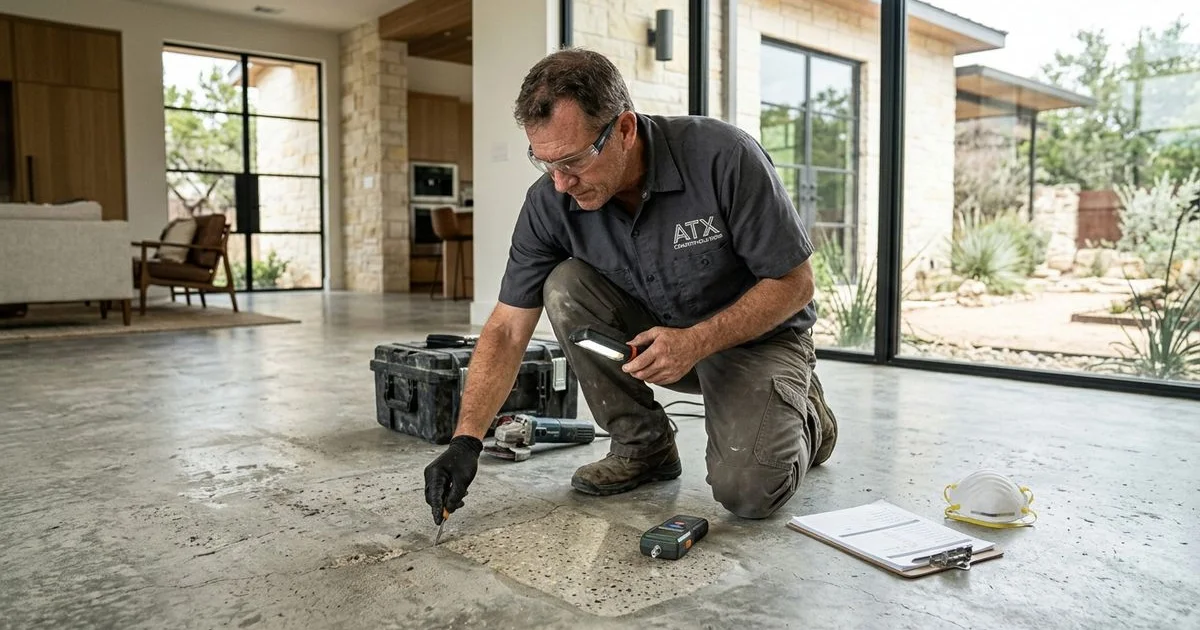
Most slabs polish beautifully
The good news: most Austin slabs are candidates for Polished Concrete. Including older slabs, slightly damaged slabs, slabs that have had old coatings, even stained slabs. The diamond grinding process removes the surface layer and reveals the concrete beneath.
What we look for:
- Slab is structurally sound (no settling, no widening cracks)
- Surface is reasonably level (or can be ground flat)
- No deep, oily contamination that has soaked through the slab
- Aggregate quality (if you want salt-and-pepper or full aggregate exposure)
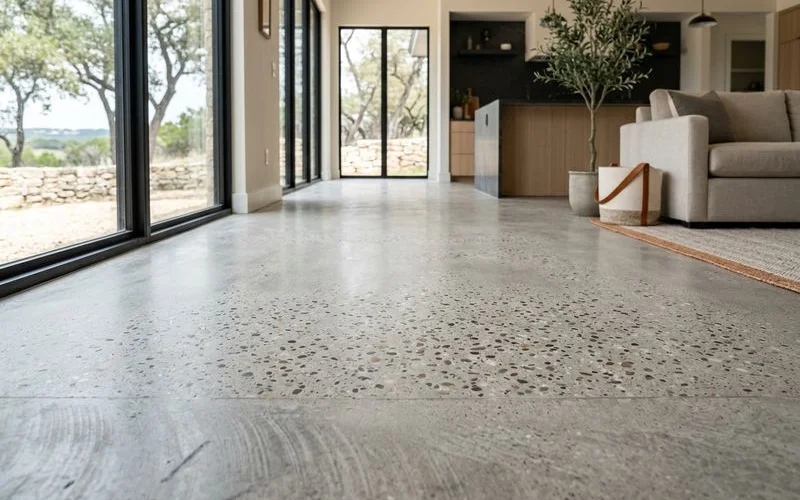
When overlay is needed first
Some slabs are better polished after a thin overlay:
- Heavily cracked or spalled surfaces where extensive grinding would weaken the slab
- Slabs with extreme color variation that won’t disappear in polish
- Slabs with too much depth difference that need self-leveler to flatten
In those cases we install a Concrete Overlay first, then polish the new overlay. Same final finish, just an extra step.
We evaluate the slab during the quote. Send a few photos with your inquiry and we can usually tell you very quickly whether you’re a direct-polish candidate.
Frequently Asked Questions
Will old paint or coating be a problem? +
We grind it off first. Old coatings come off cleanly with diamond grinding.
What if my slab has cracks? +
Hairline cracks are typically fine — they often disappear in the polish. Wider cracks get repaired first.
Will hard-water stains polish out? +
Usually yes. Surface stains grind away in the early grit passes.
Related Service
Learn more about Polished Concrete
Mechanically polished, low-maintenance concrete floors for homes and businesses.
View Polished ConcreteRelated Guides
How Long Does a Polished Concrete Floor Last?
Polished concrete lasts 20+ years residentially and 10-20 years commercially. The slab is the finish — there's no coating to fail.
Is Polished Concrete Slippery or Hard to Maintain?
Polished concrete is no slipperier than tile and easy to maintain with neutral cleaner and occasional reseal.
Polished Concrete Cost per Square Foot in Austin
Polished concrete in Austin typically runs $5-$12 per square foot. Gloss level, slab condition, and dye drive the range.
Polished Concrete Gloss Levels Explained
From satin matte to mirror gloss, polished concrete comes in distinct gloss levels. Here's how they look and where each fits.