Guide
Micro-Topping vs Self-Leveling Overlay
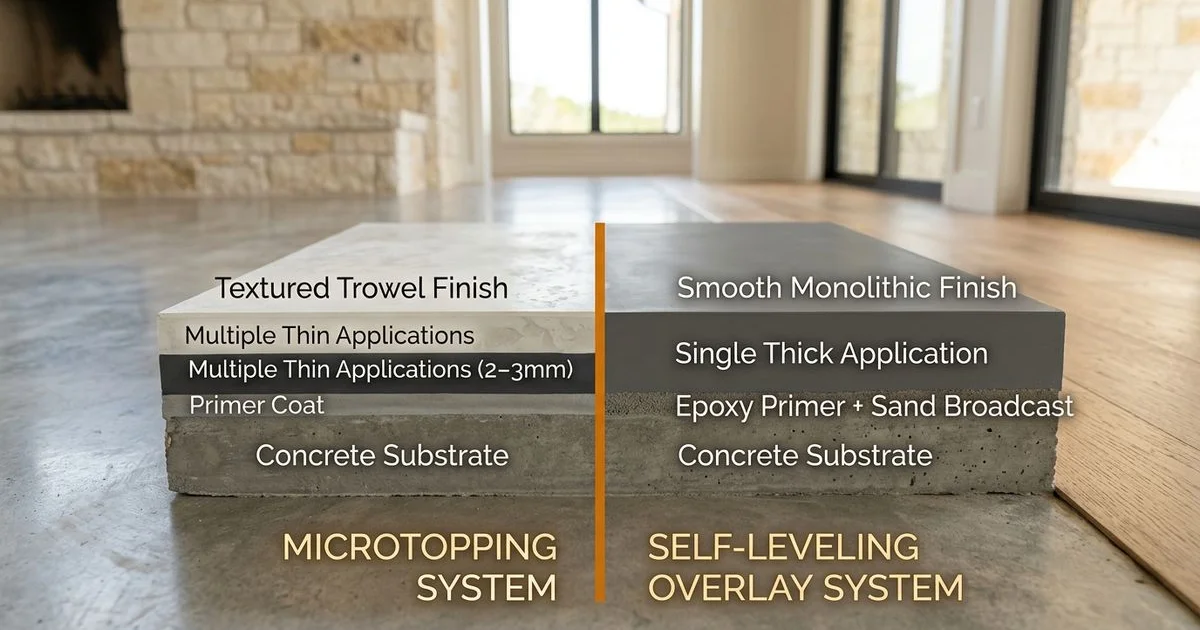
Micro-toppings are 1/8 inch and follow the slab. Self-levelers are deeper and flatten unevenness. Here's when to use each.
They solve different problems
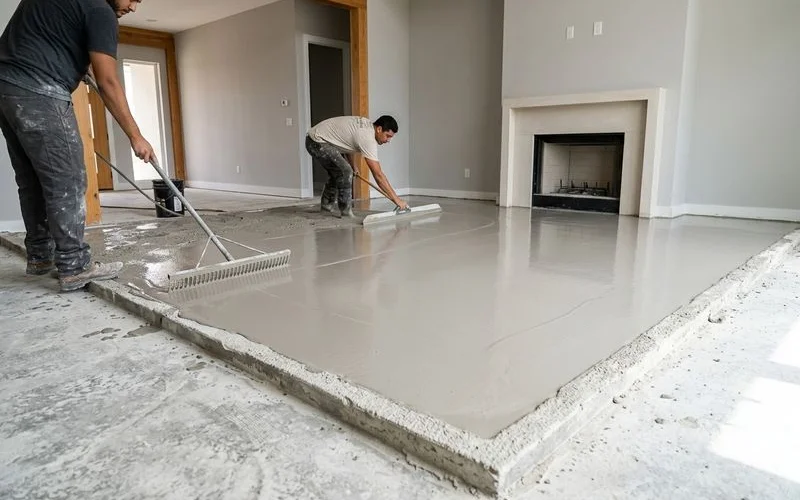
A micro-topping follows the existing slab — so flatness depends on the slab being flat. It’s perfect for a refined finish over a sound, level surface. A self-leveling overlay is liquid: it flows out and levels itself, building up where the slab dips and skimming where it doesn’t. Use it when the slab is uneven.
Both are part of the Concrete Overlays & Micro-Toppings family. The choice depends entirely on the slab condition.
Picking by slab condition
Run a level across your slab. If it’s within 1/8” over most of the floor, micro-topping works. If it dips more than 1/4” in spots, self-leveler is the right call — and may save you from a much larger leveling job.
For some projects we combine both: self-leveler to flatten the slab, then a micro-topping skim coat for the final troweled finish. That gives you a perfectly flat substrate and the texture and color you want on top.
We’ll level-check the slab during the quote and recommend the path that fits your budget and aesthetic goals.
Frequently Asked Questions
Which is more expensive? +
Self-leveling typically costs more per square foot due to material thickness and labor needed for flow control.
Can they be combined? +
Yes — self-leveler can flatten the slab, then a micro-topping can be troweled on top for the desired finish texture.
Which dries faster? +
Micro-topping. Self-levelers need more cure time before traffic or finishing.
Related Service
Learn more about Concrete Overlays & Micro-Toppings
Thin micro-toppings and self-levelers for smooth, modern concrete finishes.
View Concrete Overlays & Micro-Toppings