Guide
Polished Concrete vs Stained Concrete
Polished is mechanical refinement. Stained is chemical color. Often combined — polished-and-stained gives both.
They do different things
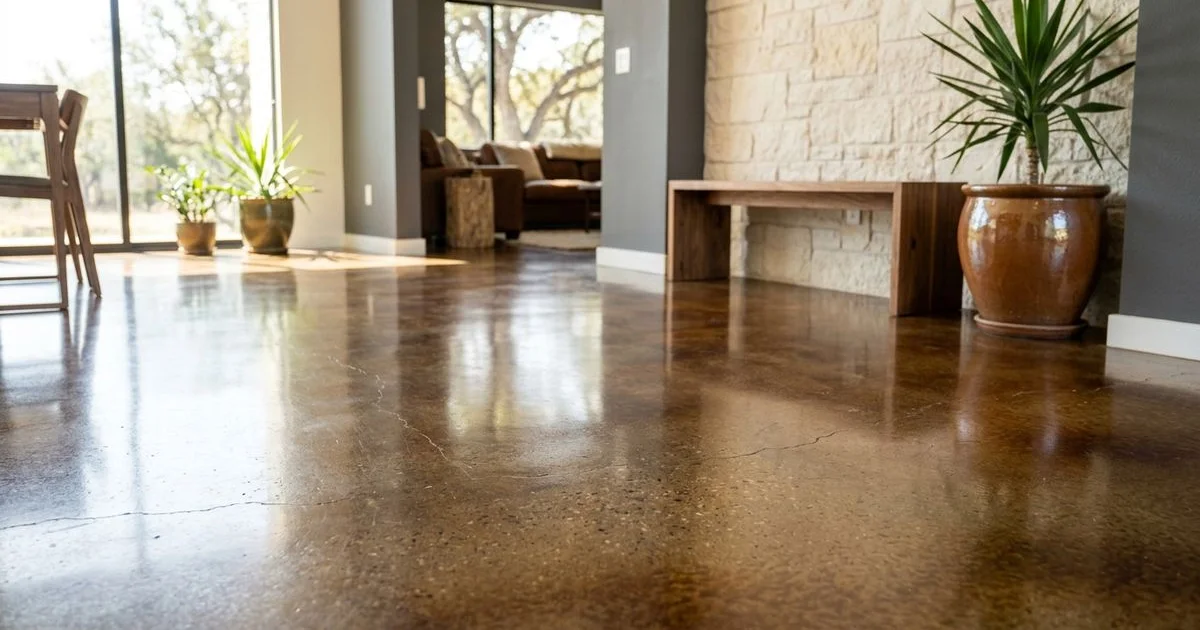
Polished Concrete refines the surface. Staining colors it. The two are completely independent processes that work together beautifully.
A polished-only floor takes on the natural color of the concrete — grays, off-whites, or whatever color the slab was poured in. Plus the gloss level you choose.
A polished-and-stained floor adds chemical color: rich browns, ambers, blues, greens, or custom palettes. Acid stains give mottled, stone-like depth. Water-based dyes give more uniform vibrant color.
When to combine
Most polished-concrete projects don’t need staining — natural concrete looks great. Add stain when:
- You want a warmer color (earth tones, ambers, terracotta)
- The slab color isn’t appealing as-is
- You want the variegated depth of acid stain
- You want a deep, designer color (water-based dye)
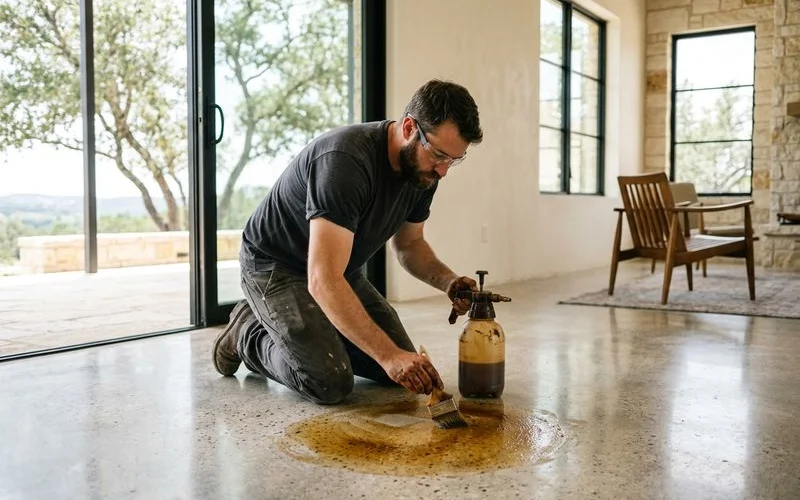
The stain or dye is applied during the polish process, not after. Adding it to a finished polished floor is harder than incorporating it at the right stage. Discuss color preferences during the quote so we can plan the sequence.
Frequently Asked Questions
Can you stain a polished floor? +
Stain is typically applied during the polish process, not after. Dye also works mid-polish.
Will the color be uniform? +
Dyes are more uniform. Acid stains are intentionally variegated, like natural stone.
Can I have polish without stain? +
Yes — natural concrete color with polished finish is classic and beautiful.
Related Service
Learn more about Polished Concrete
Mechanically polished, low-maintenance concrete floors for homes and businesses.
View Polished ConcreteRelated Guides
How Long Does a Polished Concrete Floor Last?
Polished concrete lasts 20+ years residentially and 10-20 years commercially. The slab is the finish — there's no coating to fail.
Is My Existing Slab a Good Candidate for Polishing?
Most slabs polish well. Old, contaminated, or extremely cracked slabs may need overlay first. Here's how to tell.
Is Polished Concrete Slippery or Hard to Maintain?
Polished concrete is no slipperier than tile and easy to maintain with neutral cleaner and occasional reseal.
Polished Concrete Cost per Square Foot in Austin
Polished concrete in Austin typically runs $5-$12 per square foot. Gloss level, slab condition, and dye drive the range.