Guide
What Is Polished Concrete and How Is It Done?
Polished concrete is the slab itself, mechanically ground through a grit progression to a finished surface. Here's the full process.
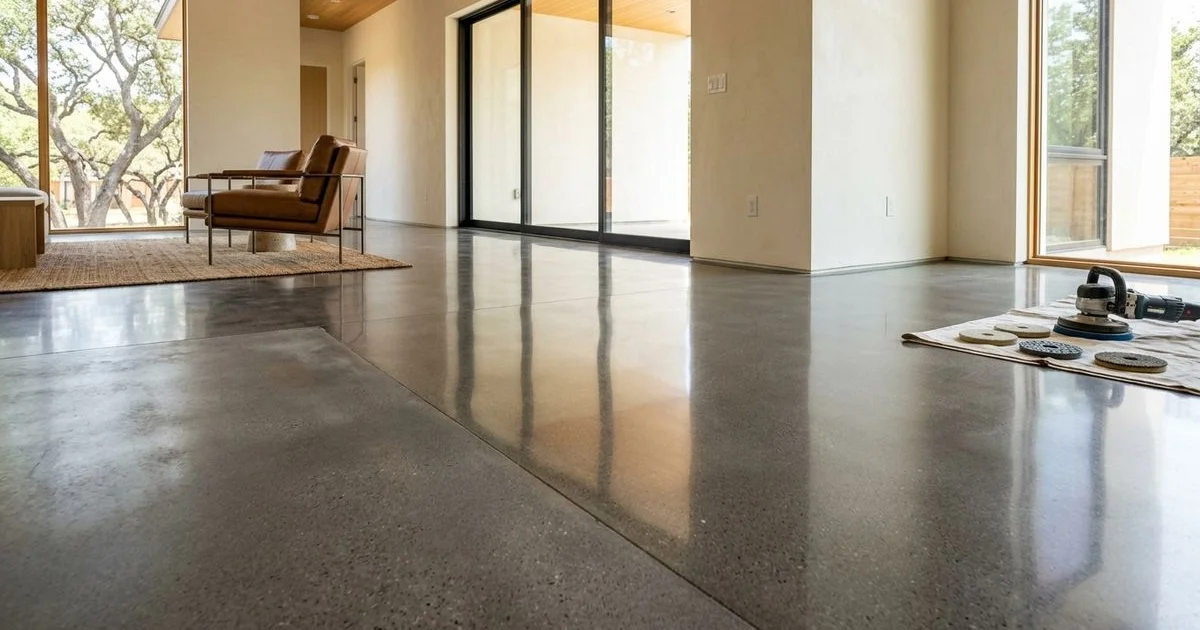
A finishing process, not a coating
Polished Concrete is the slab itself, mechanically ground and densified to a finished surface. No epoxy, no resin, no coating. The floor you see is the concrete that was already there.
The process uses planetary grinders with diamond-tooled heads, working through a grit progression. Early passes (30-100 grit) remove the rough surface and any old coatings. Mid passes (200-400 grit) refine. Final passes (800-3000 grit) polish to the chosen gloss level.
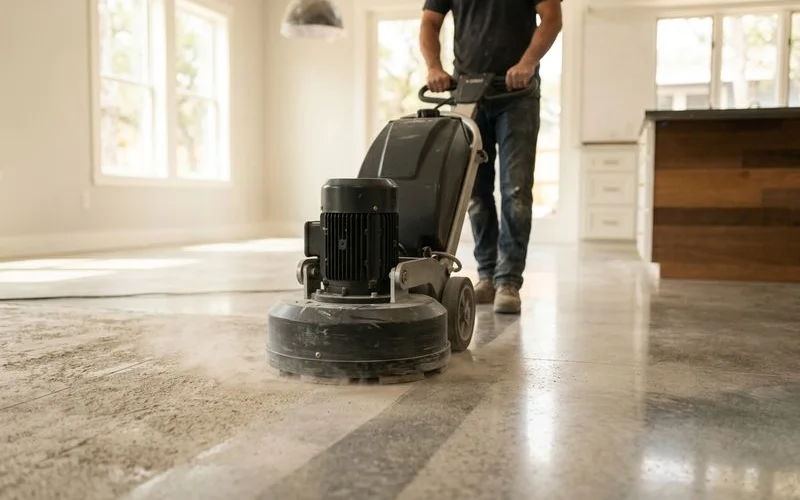
Densifier and sealer
Between grit passes, a lithium-silicate densifier is applied. The densifier soaks into the concrete and reacts chemically with the surface, hardening it dramatically. It’s the secret behind polished concrete’s durability — the surface is harder than the original slab by a meaningful margin.
After polishing, a penetrating sealer or stain-guard locks the surface against staining from oil, wine, and everyday spills.
Why it’s our #1 service
Polished concrete is the most durable, longest-lasting decorative concrete finish we install. There’s no coating to peel, no sealer to recoat every 5 years, no fade. The slab is the floor. Done right, it lasts 20+ years residentially with minimal maintenance.
Frequently Asked Questions
Is polished concrete a coating? +
No — it's the actual slab, mechanically refined. No coating to peel.
How long does install take? +
3-5 days for a typical residential floor depending on size and gloss level.
Will any slab take polish? +
Most slabs do. Heavily damaged or contaminated slabs may need overlay first.
Related Service
Learn more about Polished Concrete
Mechanically polished, low-maintenance concrete floors for homes and businesses.
View Polished ConcreteRelated Guides
How Long Does a Polished Concrete Floor Last?
Polished concrete lasts 20+ years residentially and 10-20 years commercially. The slab is the finish — there's no coating to fail.
Is My Existing Slab a Good Candidate for Polishing?
Most slabs polish well. Old, contaminated, or extremely cracked slabs may need overlay first. Here's how to tell.
Is Polished Concrete Slippery or Hard to Maintain?
Polished concrete is no slipperier than tile and easy to maintain with neutral cleaner and occasional reseal.
Polished Concrete Cost per Square Foot in Austin
Polished concrete in Austin typically runs $5-$12 per square foot. Gloss level, slab condition, and dye drive the range.