Guide
Acid Stain vs Water-Based Dye for Concrete
Acid stains give variegated stone-like depth. Water-based dyes give uniform vibrant color. Each fits different aesthetic goals.
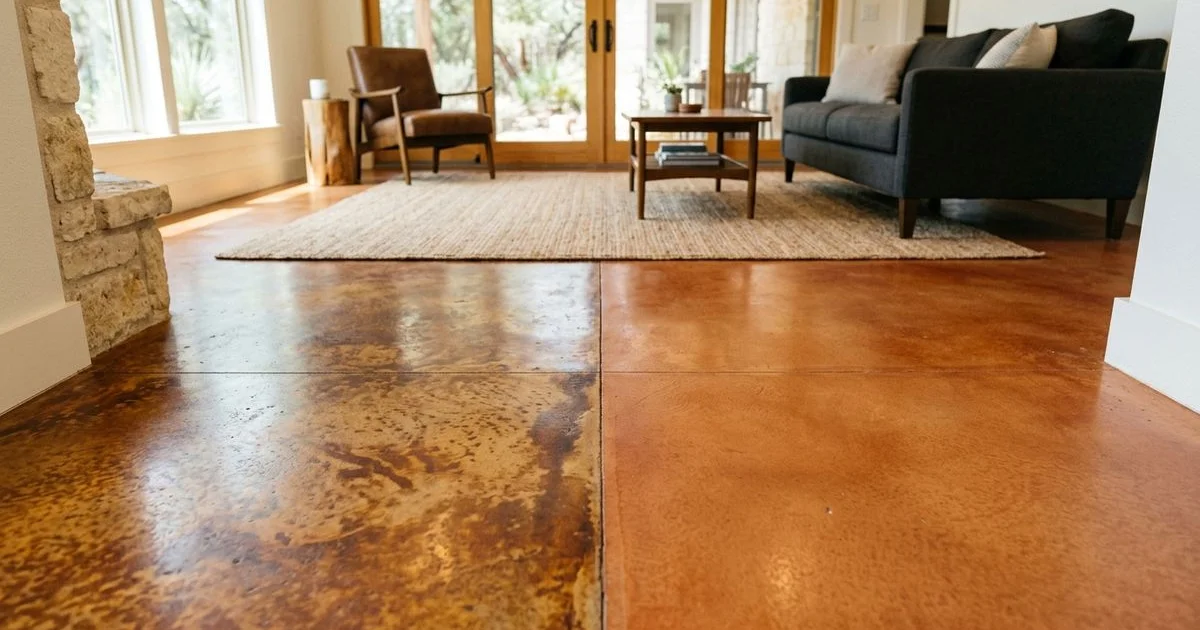
Two different chemistries, two different looks
Acid stain (technically reactive stain) is a metallic salt solution that reacts chemically with the lime in concrete. The reaction creates permanent, variegated color that mimics natural stone. Color palette is earthy — browns, ambers, terracottas, blues, greens — and intentionally non-uniform.
Water-based dye is a colorant suspended in water (or solvent in some products) that penetrates the concrete surface. Color is more uniform, vibrant, and the palette is much wider. Modern dyes can match almost any color, including bright and saturated tones.
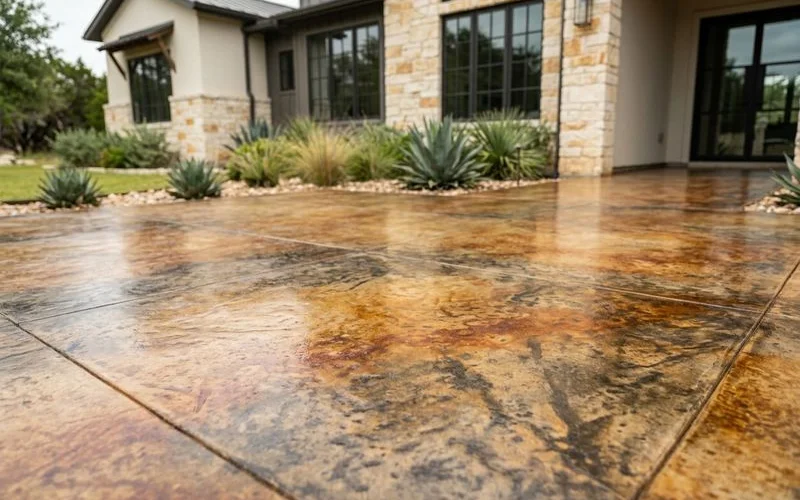
How to choose
Pick acid stain when you want:
- Natural stone aesthetic
- Earthy, organic palette
- Variegated depth and movement
- Rustic, antique, or Spanish-style aesthetic
Pick water-based dye when you want:
- Specific brand or accent color
- Modern, uniform finish
- Bright or saturated tones
- Tighter color consistency
For Concrete Staining projects, we’ll bring samples in your color range so the decision feels concrete. Either way the final surface gets sealed with UV-stable sealer for Texas sun.
Frequently Asked Questions
Which lasts longer? +
Both last decades when sealed properly. Acid stain is chemically bonded; water-based dye is a penetrant. Sealer life drives reseal interval more than stain type.
Which has more color choices? +
Water-based dye. Acid stain palettes are more limited but produce stone-like depth that dye can't match.
Can they be combined? +
Yes — layered stain and dye for complex color effects. Higher cost and more skill required.
Related Service
Learn more about Concrete Staining
Acid stains and water-based dyes for rich, variegated, stone-like color.
View Concrete StainingRelated Guides
Can Old or Stained Concrete Be Stained Over?
Usually yes — grind to clean concrete, neutralize, then stain. Heavily damaged slabs may need overlay first.
How Long Does Stained Concrete Last and Need Resealing?
Stain itself is permanent. Sealers last 3-5 years outdoors, longer indoors. Plan reseal at those intervals to keep color sharp.
Stained Concrete vs Stamped Concrete for Patios
Stain adds color; stamp adds pattern. For patios, the choice is between a flat color statement and a stone-look pattern.
The Concrete Staining Process, Step by Step
Prep, neutralize, stain, neutralize, seal. The five-step staining process produces beautiful, long-lasting color.