Guide
Can Old or Stained Concrete Be Stained Over?
Usually yes — grind to clean concrete, neutralize, then stain. Heavily damaged slabs may need overlay first.
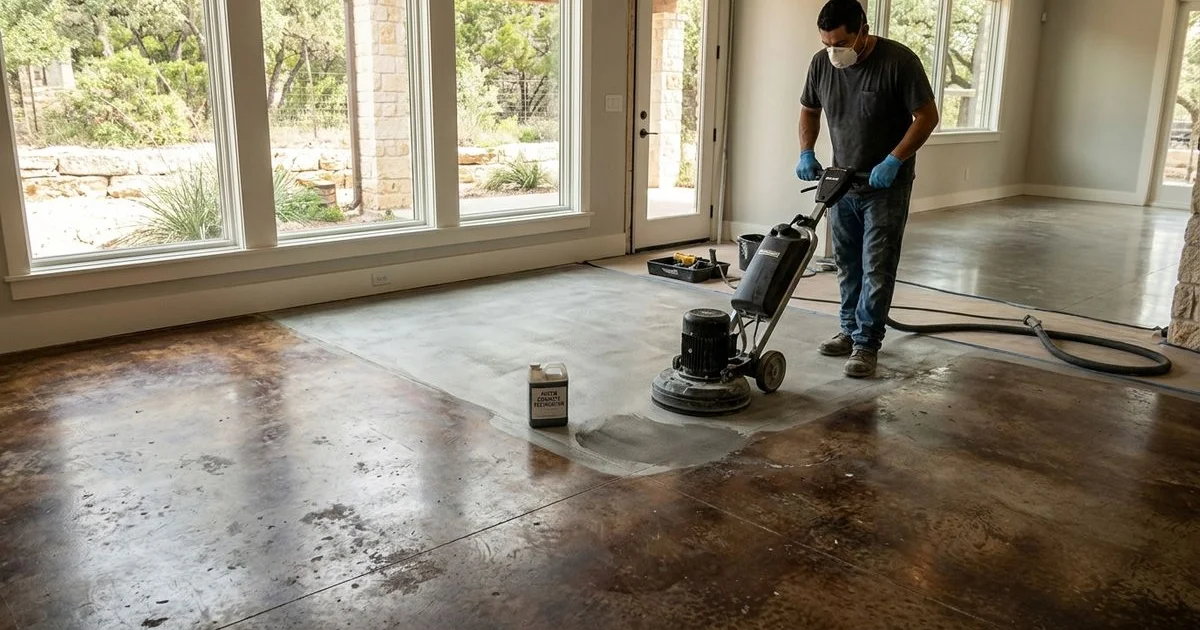
Old slabs accept stain well
Old concrete typically takes stain beautifully — sometimes better than newer slabs. The reason is more cured lime is available to react with acid stain, producing richer color.
What matters is prep. The slab needs to be clean — diamond ground, with any old coatings or sealers removed. We grind to a CSP 1-2 surface profile for Concrete Staining (lighter than coating prep, but real).
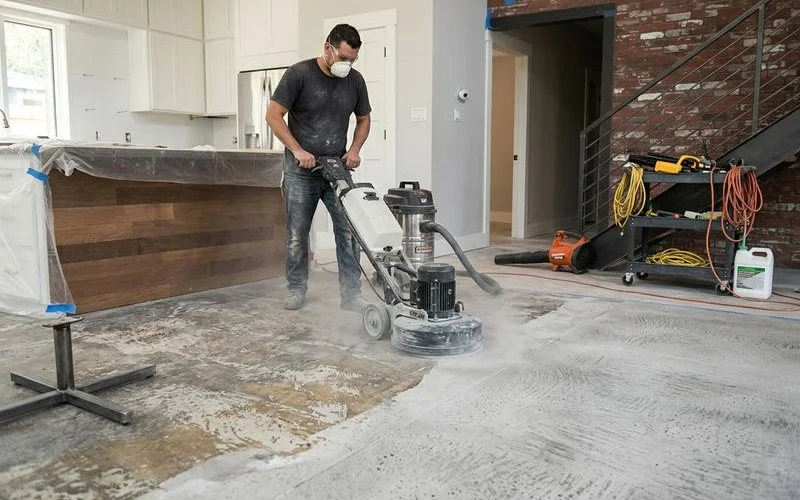
What can complicate it
Three situations where staining might not be the right path:
- Heavily contaminated slabs. Deep oil, rust, or other contamination may bleed through the new stain.
- Heavily damaged slabs. If the slab is cracked or spalled badly, overlay first, stain the overlay second.
- Slabs with embedded color or aggregate. Some older slabs have pigmented aggregate or dyes that affect new color uptake.
We evaluate the slab during the quote. For most old patios and interior floors, staining is straightforward — and the result looks like a fresh, decorative concrete project, not a touch-up of the old surface.
Frequently Asked Questions
Will old stain show through? +
After proper grinding and neutralization, no. The old reactive color is removed with the surface.
What about old paint? +
Comes off with grinding. We always grind old coatings off as part of prep.
Will old concrete take new color the same? +
Cured old concrete actually accepts acid stain better than fresh concrete — more reactive lime available.
Related Service
Learn more about Concrete Staining
Acid stains and water-based dyes for rich, variegated, stone-like color.
View Concrete StainingRelated Guides
Acid Stain vs Water-Based Dye for Concrete
Acid stains give variegated stone-like depth. Water-based dyes give uniform vibrant color. Each fits different aesthetic goals.
How Long Does Stained Concrete Last and Need Resealing?
Stain itself is permanent. Sealers last 3-5 years outdoors, longer indoors. Plan reseal at those intervals to keep color sharp.
Stained Concrete vs Stamped Concrete for Patios
Stain adds color; stamp adds pattern. For patios, the choice is between a flat color statement and a stone-look pattern.
The Concrete Staining Process, Step by Step
Prep, neutralize, stain, neutralize, seal. The five-step staining process produces beautiful, long-lasting color.