Guide
Stained Concrete vs Stamped Concrete for Patios
Stain adds color; stamp adds pattern. For patios, the choice is between a flat color statement and a stone-look pattern.
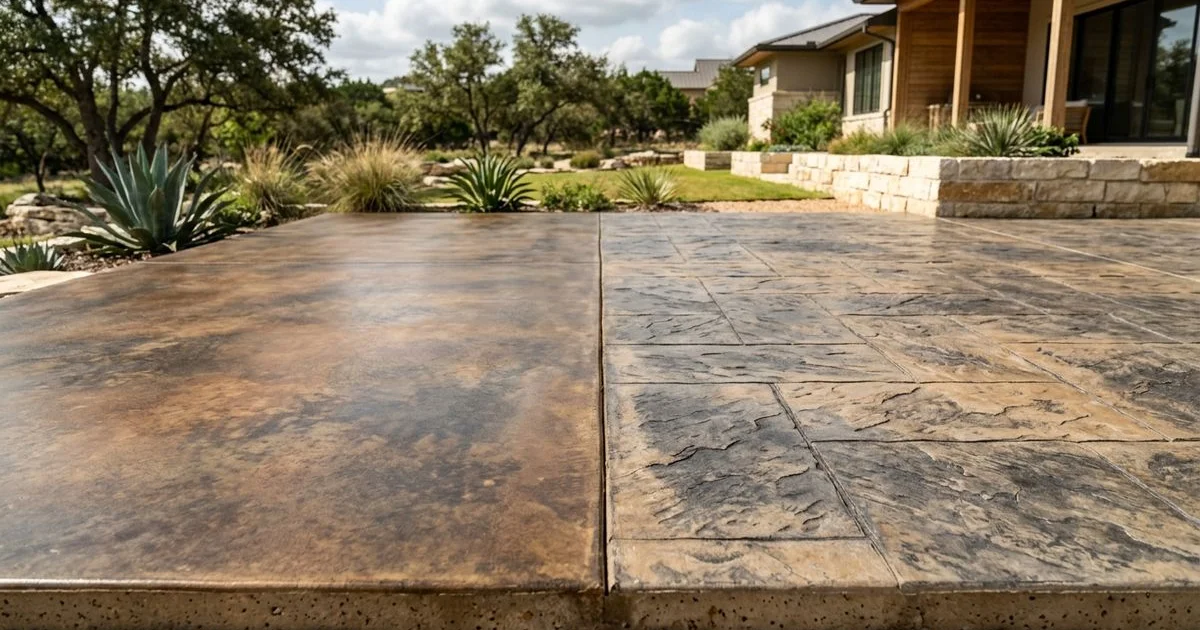
Color vs. pattern — different aesthetic goals
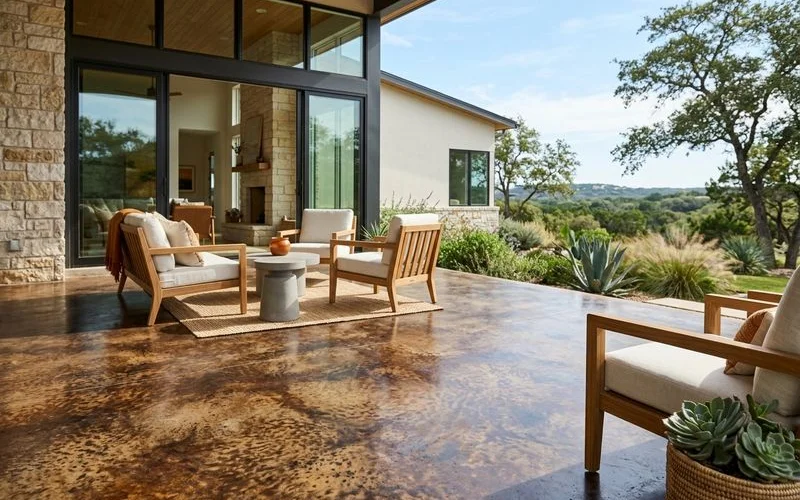
Concrete Staining gives the patio a flat surface with rich color. Acid stains produce stone-like depth. The patio is one continuous surface in your chosen palette — modern, refined, minimal.
Stamped concrete adds pattern: stone, brick, slate, wood plank. The surface reads as a different material (the illusion is excellent). Choose stamp when the patio should look like flagstone, cobblestone, or brick.
How to choose
Pick stained when:
- You want a modern, flat-surface aesthetic
- The space is open and the floor is one continuous color statement
- Budget matters
- You prefer organic color depth over geometric pattern
Pick stamped when:
- You want a specific stone/brick/wood look
- The patio is designed to look like another material
- Visual texture and pattern matter more than flat color
- You want the natural-stone aesthetic without the cost of real stone
For maximum versatility — a stained-and-stamped patio combines both. Higher cost but extraordinary visual depth. We’ve done several across Westlake and Lakeway and the results are stunning.
Frequently Asked Questions
Which is cheaper? +
Stained, typically. Stamped overlay involves more labor and material — though both are mid-range projects.
Which lasts longer? +
Both last decades with proper sealing. Stamped overlays may show stamp lines over time; stain doesn't have that issue.
Can I do both? +
Yes — stained-and-stamped is a common combination for premium patios.
Related Service
Learn more about Concrete Staining
Acid stains and water-based dyes for rich, variegated, stone-like color.
View Concrete StainingRelated Guides
Acid Stain vs Water-Based Dye for Concrete
Acid stains give variegated stone-like depth. Water-based dyes give uniform vibrant color. Each fits different aesthetic goals.
Can Old or Stained Concrete Be Stained Over?
Usually yes — grind to clean concrete, neutralize, then stain. Heavily damaged slabs may need overlay first.
How Long Does Stained Concrete Last and Need Resealing?
Stain itself is permanent. Sealers last 3-5 years outdoors, longer indoors. Plan reseal at those intervals to keep color sharp.
The Concrete Staining Process, Step by Step
Prep, neutralize, stain, neutralize, seal. The five-step staining process produces beautiful, long-lasting color.