Guide
What Is Hot-Tire Pickup and How Is It Prevented?
Hot-tire pickup is when a parked tire pulls coating off the floor. The fix is industrial prep, the right primer, and a polyaspartic topcoat.
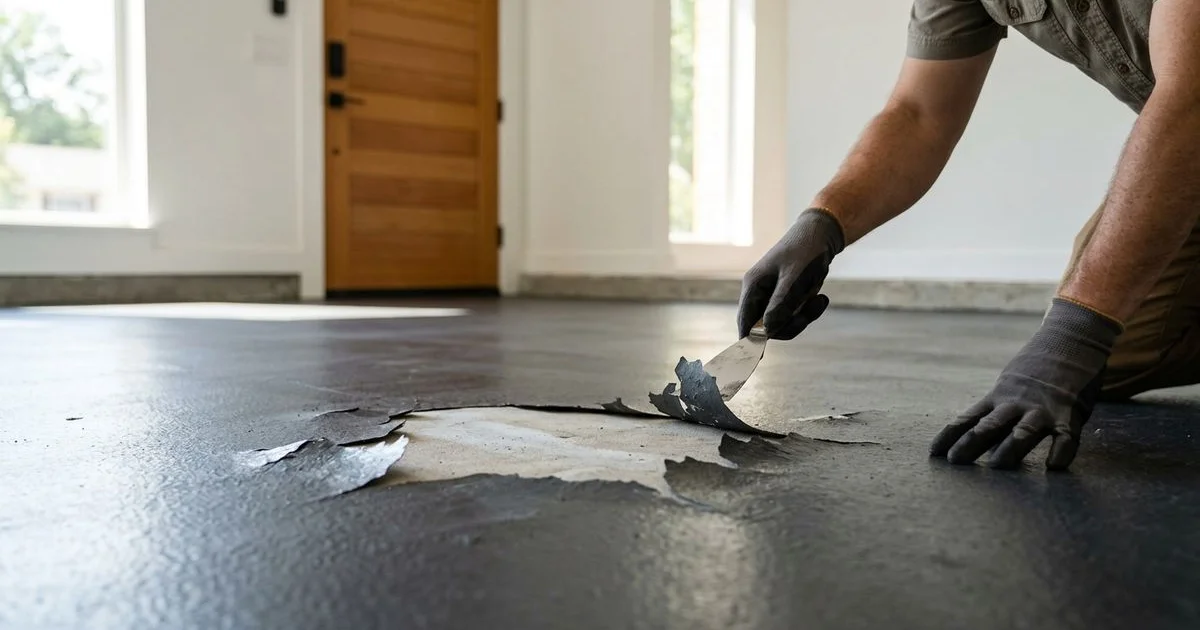
Hot tires plasticize cheap coatings
A parked car puts pressure and heat into the floor. With a poorly bonded coating, the heat softens the resin and the pressure pulls it loose when the tire moves. Result: a sticky, lifted patch shaped like a tire footprint. It’s the classic failure mode of DIY Epoxy Garage Floor Coatings and it shows up within months.
The root cause is always the same: the coating never bonded mechanically to the slab. Acid etching, single-part epoxies, and skipped grinding all leave you with a coating that’s essentially sitting on top of the concrete. The hot tire is just what reveals it.
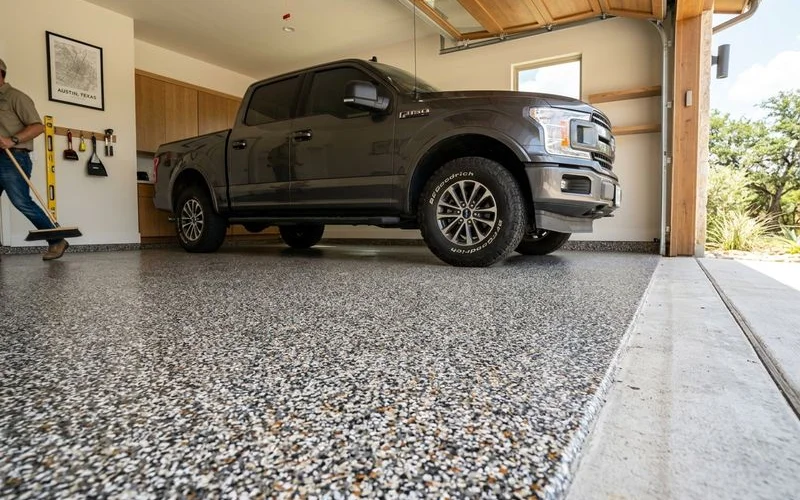
How to prevent it
Three things make a floor immune to hot-tire pickup:
- Diamond grinding to a CSP 2 to 3 surface profile. The coating bonds mechanically into the open concrete.
- Industrial-grade two-part epoxy or polyurea primer. Single-part DIY products soften under tire heat. Two-part industrial chemistry doesn’t.
- Polyaspartic topcoat. Polyaspartic stays color-stable and abrasion-resistant under heat. It’s the final barrier between your tires and the basecoat.
Done together, those three steps eliminate the failure mode entirely. We’ve installed flake-and-polyaspartic systems across the Austin metro that are still tire-free decades into use — every one of them got proper prep.
If you’ve got hot-tire damage on an existing floor, it’s a grind-and-recoat job, not a patch. The new system needs to bond mechanically just like the original should have.
Frequently Asked Questions
Does every epoxy floor get hot-tire pickup? +
No. It only happens to floors with poor prep. Industrial systems on properly prepped slabs don't get it.
Can I prevent it on an existing floor? +
If the floor is already failing, no. The fix is grind and recoat. Preventing it on a new floor means doing prep right the first time.
Is polyaspartic really immune? +
Polyaspartic-topped systems on diamond-ground slabs are highly resistant. We've never seen one fail to hot-tire pickup when prep was done right.
Related Service
Learn more about Epoxy Garage Floor Coatings
Industrial-grade flake epoxy systems that resist hot tires, chemicals, and Texas heat.
View Epoxy Garage Floor CoatingsRelated Guides
Do I Need to Grind My Garage Floor Before Epoxy?
Yes — diamond grinding is what gives epoxy a mechanical bond and stops the early peeling that ruins DIY garage floors in Texas.
Epoxy vs Polyaspartic for Austin Garage Floors
Epoxy bonds and colors; polyaspartic protects and cures fast. Most Austin garages benefit from both — here's why.
Flake Epoxy vs Solid-Color Garage Coatings
Flake systems hide imperfections and add slip resistance; solid color is simpler. See which garage floor coating fits your Austin home.
How Long Do Epoxy Garage Floors Last in Texas Heat?
A properly prepped epoxy garage floor lasts 10-20 years in Texas. See what shortens it and how polyaspartic extends it.