Guide
Flake Epoxy vs Solid-Color Garage Coatings
Flake systems hide imperfections and add slip resistance; solid color is simpler. See which garage floor coating fits your Austin home.
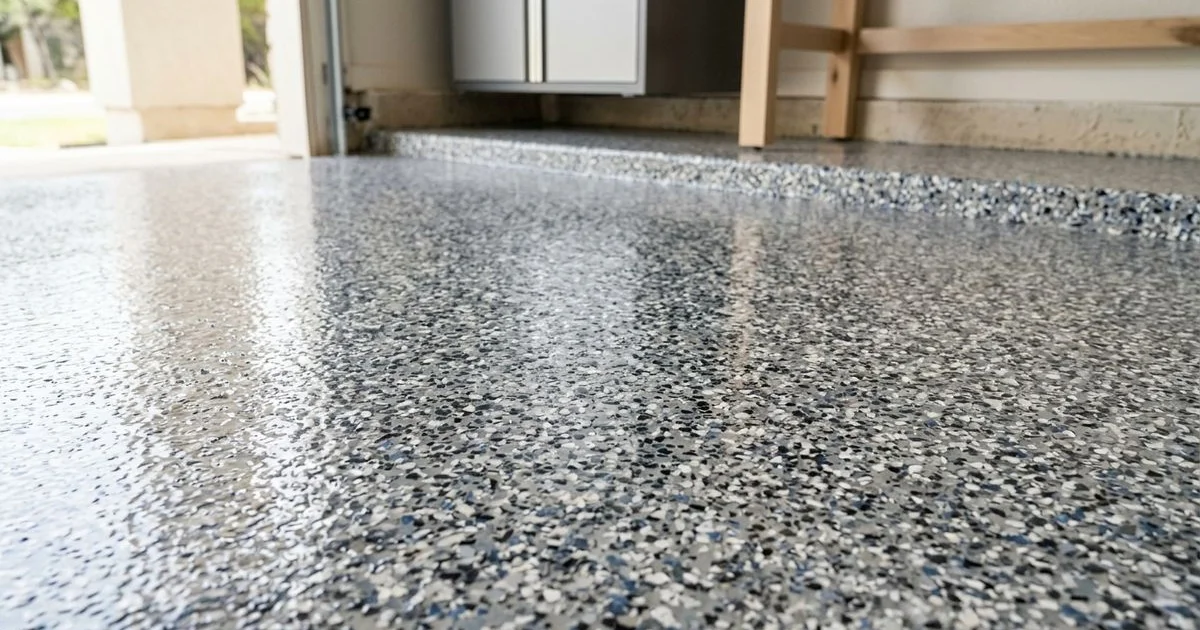
Two visual paths to a durable garage floor
Both flake epoxy and solid-color epoxy can use the same industrial-grade Epoxy Garage Floor Coatings basecoat and the same polyaspartic topcoat. The visual difference comes from what happens between those two layers.
Solid color is exactly what it sounds like — a pigmented basecoat with no broadcast layer. The floor reads as one continuous color, usually charcoal, beige, or tan. It’s clean, modern, and shows the gloss of the topcoat clearly.
Flake epoxy adds a broadcast of colored vinyl chips into the wet basecoat. Once cured, the topcoat seals the chips in place. The result is a textured, variegated floor that looks more high-end and hides imperfections.
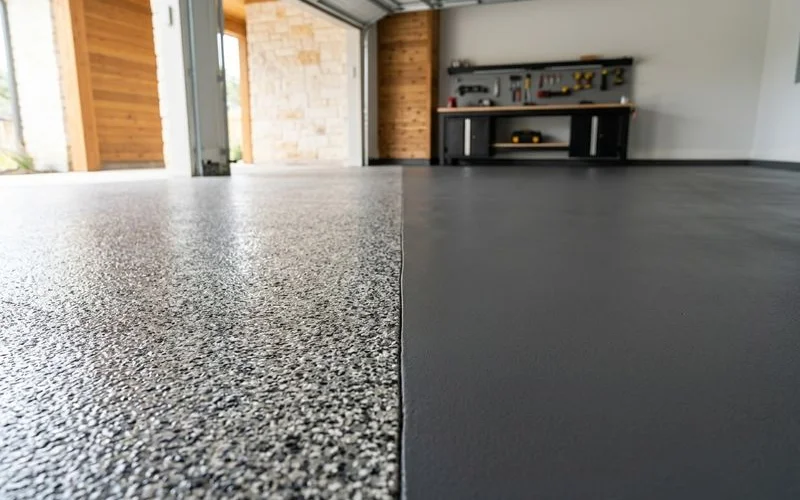
Why most Austin garages get flake
Three reasons flake systems are more popular in the Austin metro:
- Slip resistance. The broadcast texture gives real grip — important if the garage doubles as a gym, workshop, or play space. Solid color stays smooth and slick when wet.
- Imperfection hiding. Older slabs often have small surface flaws that don’t fully sand out. Flake’s texture and color variation hides them. Solid color highlights them.
- Stain camouflage. Hot tires, oil drips, gym chalk — all show more on solid color than on flake. Flake’s variation absorbs visual noise.
When solid color is the right call
Solid color is the better fit for:
- Showroom or display garages where a clean, single-color look matters more than texture
- Light-duty garages with little foot traffic and a smooth, well-cured slab
- Budget-driven projects where saving the broadcast step is meaningful
Both systems use the same prep — diamond grinding, crack repair, moisture mitigation if needed. The decision is purely aesthetic and functional, not durability. Either way, a properly prepped industrial system will outlast a DIY kit by years.
Frequently Asked Questions
Do flakes make the floor less slippery? +
Yes — the broadcast texture provides real grip, especially noticeable when wet. It's a meaningful upgrade for a workshop or family garage.
Can I pick custom flake colors? +
Yes. Flake blends are customizable — single color, two-tone, three-tone — to match your interior, vehicle, or aesthetic.
Is solid color cheaper? +
Often, yes. Solid color skips the broadcast step. But it shows surface imperfections and stains more obviously than a flake system.
Related Service
Learn more about Epoxy Garage Floor Coatings
Industrial-grade flake epoxy systems that resist hot tires, chemicals, and Texas heat.
View Epoxy Garage Floor CoatingsRelated Guides
Do I Need to Grind My Garage Floor Before Epoxy?
Yes — diamond grinding is what gives epoxy a mechanical bond and stops the early peeling that ruins DIY garage floors in Texas.
Epoxy vs Polyaspartic for Austin Garage Floors
Epoxy bonds and colors; polyaspartic protects and cures fast. Most Austin garages benefit from both — here's why.
How Long Do Epoxy Garage Floors Last in Texas Heat?
A properly prepped epoxy garage floor lasts 10-20 years in Texas. See what shortens it and how polyaspartic extends it.
Professional Epoxy vs DIY Garage Floor Kits
Hardware-store kits are 1-part epoxy with acid-etch prep. Pro systems are 2-part epoxy on diamond-ground concrete. Different floors, different lifespans.