Guide
Epoxy vs Polyaspartic for Austin Garage Floors
Epoxy bonds and colors; polyaspartic protects and cures fast. Most Austin garages benefit from both — here's why.
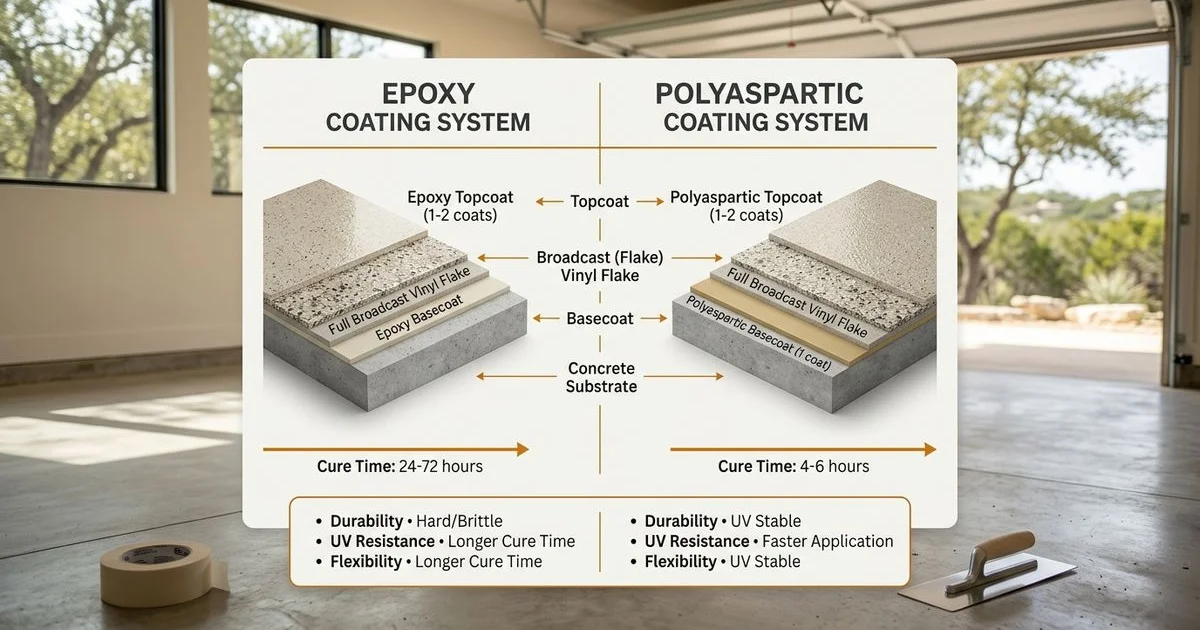
Two different chemistries doing two different jobs
Epoxy Garage Floor Coatings come from epoxy resin chemistry. Epoxy bonds spectacularly well to properly prepared concrete and accepts color, flake, and pigment dispersion beautifully. It’s the workhorse of decorative coatings — but it yellows under UV.
Polyaspartic (technically aliphatic polyurea) cures fast, stays color-stable under sun, and offers very high abrasion resistance. It’s typically used as a clear topcoat — letting the epoxy below carry color while the polyaspartic on top handles UV and wear.
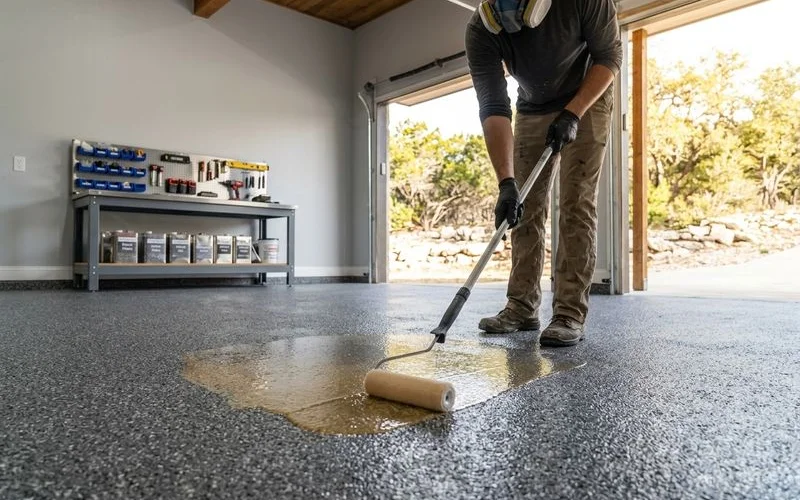
When to choose which
Use epoxy alone (with a non-UV topcoat) for fully enclosed garages with little or no sun exposure and budget pressure. Cheaper, still durable, still decades-long if prepped right.
Use polyaspartic alone for fast-turnaround installs where time matters — commercial spaces that can’t afford a multi-day downtime, or homeowners who want to park the next morning. Single-day install is the headline.
Use both for the typical Austin garage that sees afternoon sun through a south- or west-facing door. Flake epoxy gives you the color and texture; polyaspartic gives you the UV stability. That’s the system we install most often and the one with the longest real-world track record.
Cost versus lifespan
The combined system runs maybe 20 to 35 percent more than epoxy-only. Over a 15- to 20-year life, the math typically favors the combined system on cost-per-year — you get more lifespan and more UV protection for a modest premium. We’ll quote both ways if you want to compare.
Frequently Asked Questions
Is polyaspartic always better? +
Not always — it's more expensive and unnecessary for fully indoor, light-traffic garages with no UV exposure. But for typical Austin garages with sun through the door, it's worth it.
Can I do polyaspartic alone, no epoxy? +
Yes — single-day polyaspartic systems exist. They're fast, but most homeowners prefer the depth and color options of a flake-epoxy base plus polyaspartic top.
Which lasts longer? +
Combined system. Epoxy provides bond and color; polyaspartic provides UV stability and abrasion resistance. Together they outlast either alone.
Related Service
Learn more about Epoxy Garage Floor Coatings
Industrial-grade flake epoxy systems that resist hot tires, chemicals, and Texas heat.
View Epoxy Garage Floor CoatingsRelated Guides
Do I Need to Grind My Garage Floor Before Epoxy?
Yes — diamond grinding is what gives epoxy a mechanical bond and stops the early peeling that ruins DIY garage floors in Texas.
Flake Epoxy vs Solid-Color Garage Coatings
Flake systems hide imperfections and add slip resistance; solid color is simpler. See which garage floor coating fits your Austin home.
How Long Do Epoxy Garage Floors Last in Texas Heat?
A properly prepped epoxy garage floor lasts 10-20 years in Texas. See what shortens it and how polyaspartic extends it.
Professional Epoxy vs DIY Garage Floor Kits
Hardware-store kits are 1-part epoxy with acid-etch prep. Pro systems are 2-part epoxy on diamond-ground concrete. Different floors, different lifespans.