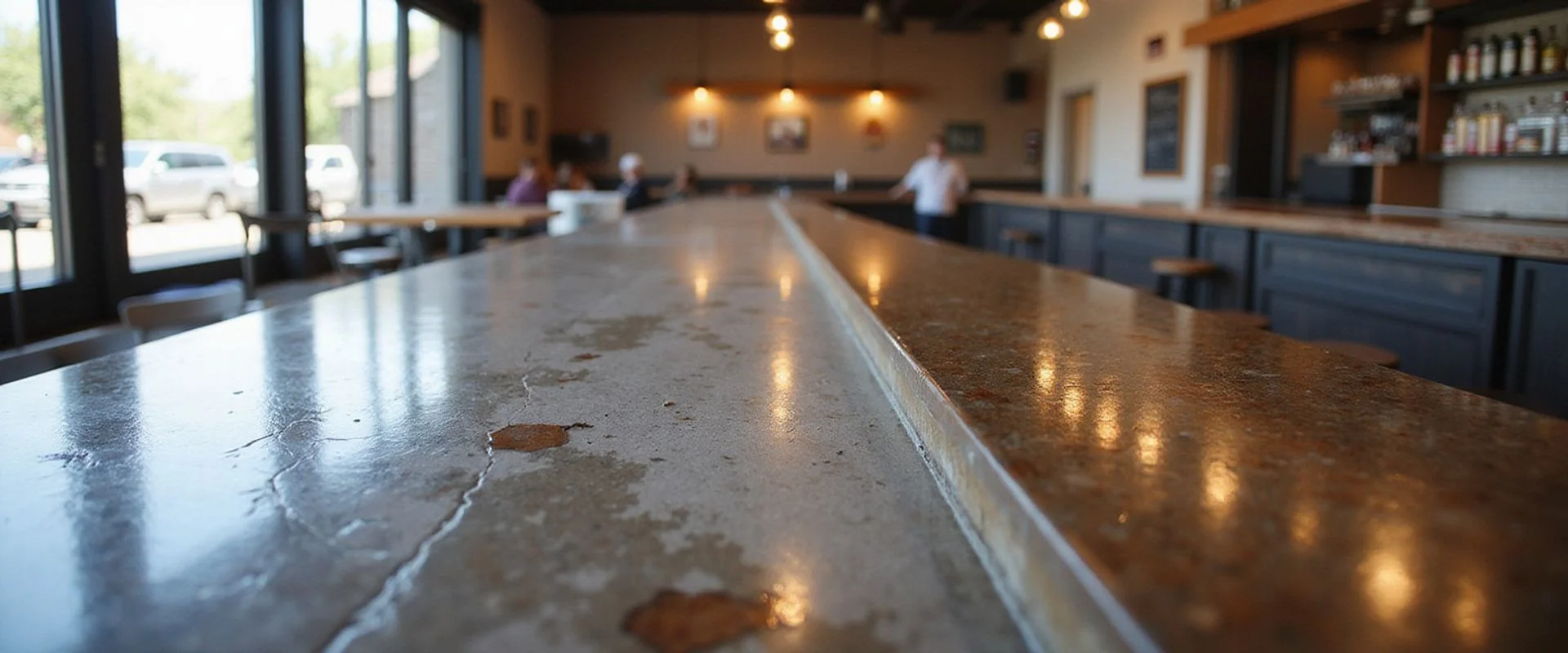
Decorative Concrete
Commercial Concrete Bar Tops and Countertops in Austin, TX
Custom concrete bar top Austin for restaurants, breweries, and coffee shops. Jason Laxson builds precast GFRC and cast-in-place bar tops sealed for commercial use. Free quotes.
Last Updated:
Our Approach to Commercial Concrete Bar Tops and Countertops
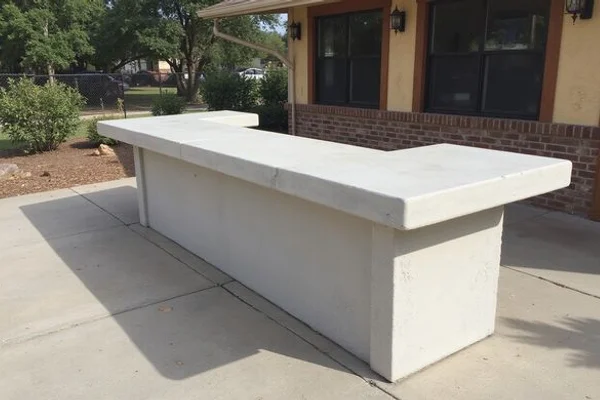
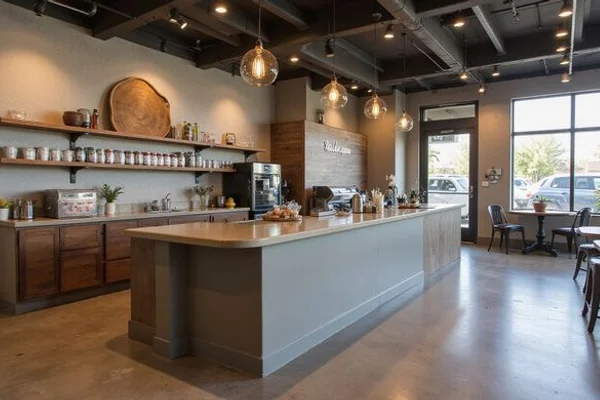
Jason Laxson builds custom concrete bar tops and countertops across Austin for restaurants, brewery taprooms, coffee shops, wine bars, and hotel lobbies. Every surface is fabricated to the client's exact dimensions - precast GFRC for standard bar shapes and tight project timelines, or cast-in-place for long runs and curved bars that need a seamless look. Food-safe sealed and built to handle the daily abuse of a working commercial bar.
Built for Restaurants, Breweries, and Bars
Austin Concrete Finishes - owner-operated by Jason Laxson since 2005 (21 years as of 2026) - builds custom concrete bar tops and countertops for Austin’s restaurant and hospitality market. The work covers bar tops for cocktail bars and taprooms, service counters for coffee shops and wine bars, host stands, outdoor patio bars, communal dining surfaces, and retail checkout counters. Every piece is custom to the space: the dimensions, the color, the finish, the integrated features, and the fabrication method.
Most fabricators in Austin specialize in one method - either precast shop work or on-site pours. Jason does both. That flexibility matters in practice: some bars need the shop-built precision and lighter weight of precast GFRC, others need the seamless monolithic look that only a cast-in-place pour can deliver. Jason evaluates each project and recommends the method that fits the bar shape, the construction timeline, and the finished result the owner wants.
A concrete bar top serving the Austin restaurant market needs to do more than look good on opening night. It needs to handle spilled drinks, citrus juice, beer kegs sliding across it, commercial dishwasher heat, and nightly cleaning with industrial chemicals - and it needs to hold up doing that for years through Central Texas heat and 100-degree summers. Jason starts every project with diamond grinding to prepare the substrate, then specs and seals the surface for commercial conditions, not residential kitchen use.
Why Concrete Works for Commercial Bars
Concrete sits at a useful intersection for commercial bar tops: it is custom to any shape, holds integrated features that other materials cannot, develops character over time rather than just looking worn, and lands in a cost range that works for long-run bar surfaces where granite becomes expensive and butcher block becomes a maintenance problem.
Custom dimensions for any bar layout. A concrete bar top can be fabricated to fit an L-shaped bar in a South Congress restaurant, a 30-foot straight run in a Domain hotel lobby, a curved taproom bar in East Austin, or an irregular island format in a Warehouse District cocktail lounge. The shape is not constrained by slab dimensions or tile grids.
Integrated features built in. Drip rails, glass rinser cutouts, tap handle mounting holes, and built-in drain boards are possible as part of the original pour or precast mold. These are fabrication decisions, not afterthoughts - they are planned at the design stage and formed into the surface so the finished bar looks intentional.
Durability under commercial abuse. Butcher block expands, contracts, and stains under heavy bar use. Granite chips at exposed edges under keg impacts and costs more per linear foot for long bar runs. Laminate peels and burns under heat. A properly sealed concrete bar top handles the daily load of a working bar better than most alternatives because the commercial sealer locks out what the concrete itself cannot resist on its own. The surface also develops a patina over time - minor wear patterns that read as character rather than damage.
Practical cost at commercial scale. Concrete is more cost-effective than natural stone for long bar surfaces, and unlike butcher block or laminate, it does not need replacement cycles over the bar’s lifetime when properly maintained.
How We Compare
| Feature | Typical Provider | Austin Concrete Finishes |
|---|---|---|
| Experience | 5-10 years | 21 years (since 2005) |
| Fabrication methods | Precast only or cast-in-place only | Both GFRC precast and cast-in-place |
| Surface prep | Minimal cleaning | Diamond grinding on every project |
| Sealer grade | Residential-grade topical sealer | Commercial penetrating sealer rated for alcohol and chemicals |
| Project contact | Sales rep, then subcontracted installer | Owner-operator Jason Laxson from quote to handoff |
Precast GFRC vs Cast-in-Place: Choosing the Right Method
The most important choice on any concrete bar top project is the fabrication method. Both produce excellent results. The right call depends on the bar’s shape, the construction schedule, and the specific surface quality the owner needs.
Precast GFRC (Glass Fiber Reinforced Concrete)
GFRC uses glass fibers mixed into the concrete matrix to deliver higher flexural strength at roughly one-third the weight of traditional cast concrete. A precast GFRC bar top section weighs significantly less than a standard precast piece of equivalent thickness. That weight reduction matters for bars mounted on wood framing, which is common in restaurant and brewery buildouts where the bar cabinet is not structural concrete.
Jason fabricates GFRC sections in his shop on a controlled timeline, independent of the construction schedule on site. Sections are poured into molds, cured, ground, and sealed in the shop before delivery. On installation day, the sections are set, seams are filled with a color-matched slurry, and the surface is polished to blend the seam lines. The finished surface reads as a continuous piece.
Typical lead time for precast GFRC is 2 to 3 weeks in fabrication plus 1 day on site for installation. This method works best for standard bar shapes where the framing is already built, for projects with tight construction schedules, and for situations where a controlled shop environment produces a better finished surface than an on-site pour would.
Cast-in-Place
Cast-in-place concrete is formed and poured directly on the bar frame on site. There are no seams. The result is a monolithic surface that reads as one continuous piece regardless of length or curvature.
Jason builds the forms on site, coordinates the pour timing with the GC or owner, pours the concrete, and then diamond-grinds, polishes, and seals over the following days as the concrete reaches working strength. The bar frame is built around the pour schedule, not the other way around. Typical on-site time is 3 to 5 days.
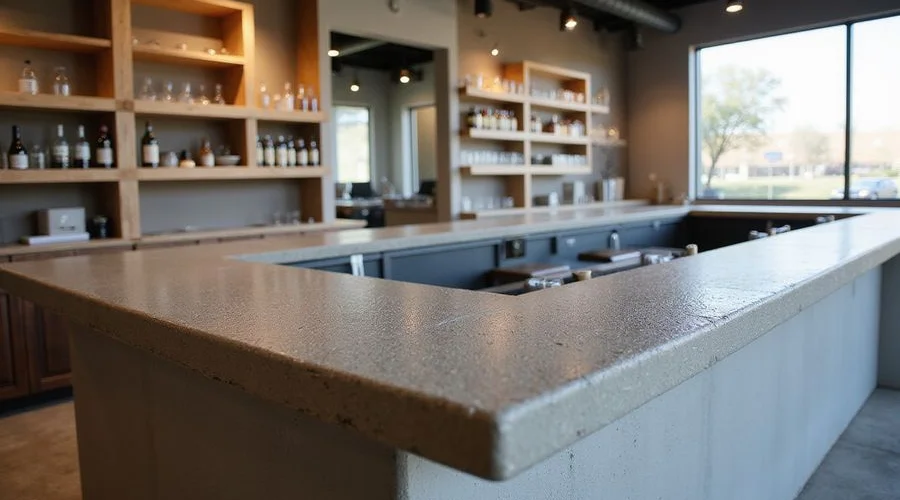
Cast-in-place is the right call for long straight runs where a seam would break the visual flow, for curved or irregular bar shapes that would require complex sectioning in a precast approach, and for new construction projects where the timeline allows for the on-site cure schedule. The bar frame needs to accommodate the pour sequence - typically 3 to 5 days before the surrounding millwork and equipment can be set around it.
Sealer and Finish Options for Commercial Use
The sealer is the most important decision after the fabrication method. A commercial bar top lives in a different chemical environment than a residential kitchen countertop. It takes citrus juice from cocktail prep, alcohol from spilled drinks and bar mat rinse water, coffee oils, and nightly cleaning with industrial degreasers and sanitizers.
Jason specifies commercial-grade penetrating sealers - including polyaspartic topcoats for high-traffic bars - that are food-safe and rated for all of those conditions. The sealer penetrates the concrete surface rather than sitting on top of it, which means it cannot peel, flake, or lift under bar traffic. Unlike film-forming sealers that break down under Austin’s intense UV exposure, penetrating sealers lock out what the concrete cannot resist on its own.
Finish levels for the sealed surface are matte, satin, or gloss:
- Matte works well for craft cocktail bars and wine tasting rooms where a high-shine surface would conflict with the aesthetic. Also common on coffee shop counters where the look is clean and functional.
- Satin is the most common choice for Austin taprooms and restaurant bars - present enough to read as finished and sealed without demanding visual attention.
- Gloss finishes suit high-end hotel bars and modern cocktail lounges where the bar top is a deliberate design feature.
Color options:
Integral pigment - color mixed directly into the concrete before the pour. The result is a uniform color that runs through the full depth of the material, so chips or edge wear do not expose raw gray concrete underneath. Best for predictable, specific color matching to a designed bar environment.
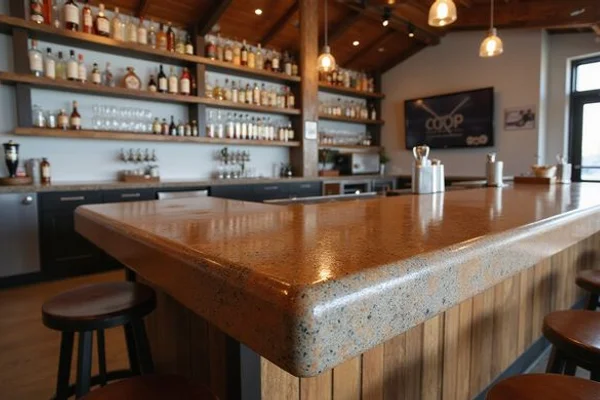
Acid stain - a reactive chemical applied after cure that produces a mottled organic pattern with amber, terracotta, and walnut tones. No two acid-stained surfaces look identical because the reaction depends on the mineral content of the specific concrete batch. Common in Austin brewery taprooms and farm-to-table restaurants that want warmth and visible material character.
Water-based dye - penetrates the surface for bold, uniform, vibrant color. Works well for modern retail counters, specialty coffee shop service bars, and any application where a clean, saturated color is the design intent.
For high-volume bars, Jason includes a resealing schedule as part of every project handoff. A busy cocktail bar or taproom typically needs a sealer reapplication every 1 to 2 years. A coffee shop counter or lower-volume wine tasting bar can go 3 to 5 years between applications. The reapplication is not a major job - a professional clean and fresh sealer coat keeps the surface performing at the original specification.
Hospitality and Retail Applications
Concrete works across the full range of hospitality and commercial service surfaces. The applications Jason builds regularly for Austin clients include:
Restaurant and cocktail bar tops. The primary application. Custom dimensions for any bar layout, with drip rails, glass rinser cutouts, and integrated features built in at fabrication. Handles full bar traffic volume with commercial sealing.
Brewery taproom bars. Austin’s craft brewery scene has been an active market for concrete bar tops. The material fits the industrial-warm aesthetic that defines taproom design in East Austin and the surrounding neighborhoods, and it holds up to the keg traffic and bar mat conditions of an operating taproom.
Coffee shop service counters. Concrete service counters are common in specialty coffee shops along South Congress, Rainey Street, and the Barton Springs corridor. A matte or satin finish suits the aesthetic, and a commercial sealer handles daily coffee and tea exposure.
Host stands and hostess counters. Smaller-format poured concrete surfaces that carry the material language of the bar top through to the entry experience without requiring a separate fabricator.
Outdoor patio bars. Exposed concrete bar tops for covered patio bars and outdoor food truck parks in Austin’s year-round outdoor dining culture. Cast-in-place works particularly well for patio bars at venues along the Second Street District, Mueller, and West Lake Hills where the bar structure is integrated into the landscape or hardscape design. Jason seals outdoor surfaces with a UV-stable polyaspartic product rated for full Austin sun and Central Texas temperature swings.
Wine tasting counters. Typically cast-in-place for a seamless finish, with a matte or satin seal and acid stain for warmth. Common in the wine bars and tasting rooms along the Barton Springs corridor, the Domain, and South Lamar.
Retail checkout counters. Concrete checkout and display counters for retail environments where the material language matches the brand. Commonly specified in East Austin boutiques and design-forward retail spaces.
Communal restaurant tables. Concrete dining table surfaces for communal tables in open-format restaurants and food halls. Typically precast GFRC for weight manageability, with the same commercial sealing spec as the bar top.
Why Austin’s Bar Scene Chooses Concrete
Austin’s food and beverage market has been running on concrete bar tops and counters for over a decade. The material performs in the context of Austin’s design-forward restaurant scene, and it holds up in the physical conditions of a working bar. East Austin brewery taprooms, South Congress coffee shops, Rainey Street cocktail bars, Domain hotel bars, and the food halls that have opened across the city have consistently used concrete surfaces because the material delivers both the industrial-warm aesthetic Austin operators want and the durability their staff puts it through every day.
The Austin aesthetic that has defined the restaurant and bar market - exposed concrete, raw materials, finishes that look like they belong in the space rather than having been imported from a catalog - is exactly what a well-executed concrete bar top delivers. It is not a trend. Austin restaurants and bars have been pouring concrete surfaces for years and the demand continues because the material performs and the look holds up.
A bar owner or restaurant operator searching for a concrete bar top is not looking for a decorative residential countertop. They are looking at a 15 to 25 foot surface that will take real commercial use every night, that needs to look right in a designed space, and that needs to be built by someone who understands the difference between residential and commercial sealing requirements. Austin Concrete Finishes builds both residential countertops and commercial bar tops - and specs them differently because they live in different environments.
From First Call to Finished Bar Top
Site Visit or Plan Review
Jason visits the space or reviews architectural or GC plans, depending on where the project is in the construction timeline. He measures the bar frame, discusses finish and color options, reviews any integrated features, and confirms whether GFRC precast or cast-in-place is the right call for the specific project. For new construction buildouts, this conversation often happens from plans before the bar frame is built.
Quote
Jason sends a quote covering fabrication, materials, sealing, and installation. Pricing is custom and project-based - it depends on linear footage, bar shape, fabrication method, integrated features, and finish. Quotes are free and typically delivered within 48 hours of the site visit or plan review.
Fabrication or Site Scheduling
For precast GFRC, Jason begins fabrication in the shop. Typical fabrication runs 2 to 3 weeks. For cast-in-place, Jason schedules the on-site work with the GC or owner and arrives when the bar frame is ready for forming. He coordinates with the construction schedule so the concrete timeline does not hold up the broader buildout.
Installation
Precast GFRC: 1 day on site for section delivery, placement, seam filling, and polishing. Cast-in-place: 3 to 5 days on site for forming, pouring, cure time, grinding, polishing, and sealing.
Handoff
Jason walks the client through the finished surface and covers the sealing maintenance schedule - when to reseal, what products to use, and what to avoid. With Austin Concrete Finishes, one point of contact handles the project from quote to final handoff - the contractor who quoted the job is the same person who installed it and answers any follow-up questions.
Get a Free Quote for Your Austin Project
Call Jason at (512) 749-8503 or fill out the quote form on this page. Describe the space - bar type, approximate linear footage, whether it is a new buildout or renovation, and any direction you have on finish or color. Jason will respond within 48 hours with a scope, method recommendation, and price.
What you get
- ✓ Custom dimensions for any bar shape - L-shaped, curved, 30-foot straight runs, or irregular island formats
- ✓ Precast GFRC fabricated in the shop for cleaner finishes and faster installs on standard bar shapes
- ✓ Cast-in-place poured on site for zero-seam monolithic surfaces on long runs and curved bars
- ✓ Integrated features: drip rails, glass rinser cutouts, tap handle mounting holes, and built-in drain boards
- ✓ Food-safe commercial sealers rated to handle alcohol, citrus juice, coffee, and nightly cleaning chemicals
- ✓ Color options: integral pigment, acid stain, or water-based dye for bold, uniform results
- ✓ Matte, satin, or gloss finish choices to match the bar's aesthetic and volume level
- ✓ Works for restaurant bars, brewery taprooms, coffee shop counters, outdoor patio bars, and retail checkout counters
- ✓ Jason coordinates directly with the GC or owner - one point of contact throughout the project
- ✓ 21 years of decorative concrete experience across the Austin metro since 2005
Real Work
Project Gallery
What Customers Say
Austin Customers on Their Finished Concrete
"Our 20-year-old garage slab had peeling DIY epoxy. They ground it all back, fixed the cracks, and the new flake floor still looks showroom-clean through two Texas summers."
David R.
Round Rock
"The pool deck stays cool enough to walk on barefoot in August now, and it's no longer slick. Exactly what we hoped for."
Sarah M.
Lakeway
"Polished our downstairs floors to a soft satin sheen. Easy to clean, and they clearly did the prep right. No shortcuts."
Elena G.
West Lake Hills
FAQ
Commercial Concrete Bar Tops and Countertops: Your Questions Answered
How long does a commercial concrete bar top project take in Austin? +
For precast GFRC, fabrication runs 2 to 3 weeks in the shop. Installation typically takes 1 day on site, with seams filled and polished after sections are set. For cast-in-place, Jason spends 3 to 5 days on site building forms, pouring, allowing cure time, then grinding, polishing, and sealing. Jason coordinates the schedule directly with you or your general contractor.
What is GFRC and why does it matter for a commercial bar top? +
GFRC stands for Glass Fiber Reinforced Concrete. It uses glass fibers mixed into the concrete matrix to deliver much higher strength at roughly one-third the weight of traditional cast concrete. That weight reduction matters for bars mounted on wood framing, which is common in restaurant and brewery buildouts. GFRC bar top sections are fabricated in the shop, delivered, set in place, seamed, and polished so the finished surface reads as continuous.
Can concrete handle the abuse of a busy bar - spills, alcohol, citrus, and cleaning chemicals? +
Yes, with the right sealer. The sealer is the most critical component of a commercial bar top. Jason specifies commercial-grade penetrating sealers that are food-safe and rated for alcohol, citrus juice, coffee, and the caustic cleaning chemicals bars use nightly. A properly sealed concrete bar top handles that load better than butcher block, which swells and stains, and holds up better across long runs than granite, which chips at edges and gets expensive per linear foot.
How often does a commercial concrete bar top need to be resealed? +
Resealing frequency depends on bar volume. A high-volume cocktail bar or busy taproom typically needs a sealer reapplication every 1 to 2 years. A coffee shop counter or wine tasting bar in a lower-volume setting can go 3 to 5 years between applications. Jason walks every client through the maintenance schedule at project handoff so the owner knows what to expect.
What is the difference between precast GFRC and cast-in-place concrete bar tops? +
Precast GFRC is built in Jason's shop independent of the construction timeline on site. Sections are fabricated, cured, and sealed before delivery. Best for standard bar shapes where framing is already in place, or for projects with tight timelines. Cast-in-place is formed and poured directly on the bar frame on site. The result is a zero-seam monolithic surface. Best for long straight runs, curved or irregular shapes, and new construction where the schedule allows for on-site cure time.
Can concrete bar tops include integrated features like drip rails or tap mounts? +
Yes. Jason can build in drip rails, glass rinser cutouts, tap handle mounting holes, and integrated drain boards during fabrication. These details are planned at the design stage and formed into the concrete before the pour for cast-in-place work, or built into the GFRC mold for precast sections. Integrating these features during fabrication produces a cleaner result than cutting into cured concrete after the fact.
How much does a commercial concrete bar top cost in Austin? +
Pricing is custom and project-based - it depends on linear footage, bar shape, fabrication method, integrated features, and finish choice. Jason provides free quotes after reviewing your plans or visiting the space. Contact Austin Concrete Finishes at (512) 749-8503 and Jason will typically respond within 48 hours with a scope and price.
Related Services
Concrete Countertops
Custom, food-safe-sealed concrete countertops - precast or cast-in-place.
Learn more →Restaurant and Brewery Flooring
Restaurant flooring Austin for dining rooms and commercial kitchens - polished concrete, acid stain, and 100% solids epoxy from a 21-year specialist. Free quotes.
Learn more →Specialty Concrete
Concrete showers, wall coatings, terrazzo, and custom-cast furniture.
Learn more →Ready to Quote Your Commercial Concrete Bar Tops and Countertops?
Send a photo of the slab — we usually have a real number back to you the same day.