Decorative Concrete
Austin Commercial Epoxy Flooring - Owner-Installed Since 2005
Commercial epoxy flooring Austin for restaurants, warehouses, retail, and auto shops. Owner-operated by Jason Laxson since 2005, diamond-ground prep included. Free quotes.
Last Updated:
Our Approach to Commercial Epoxy Flooring
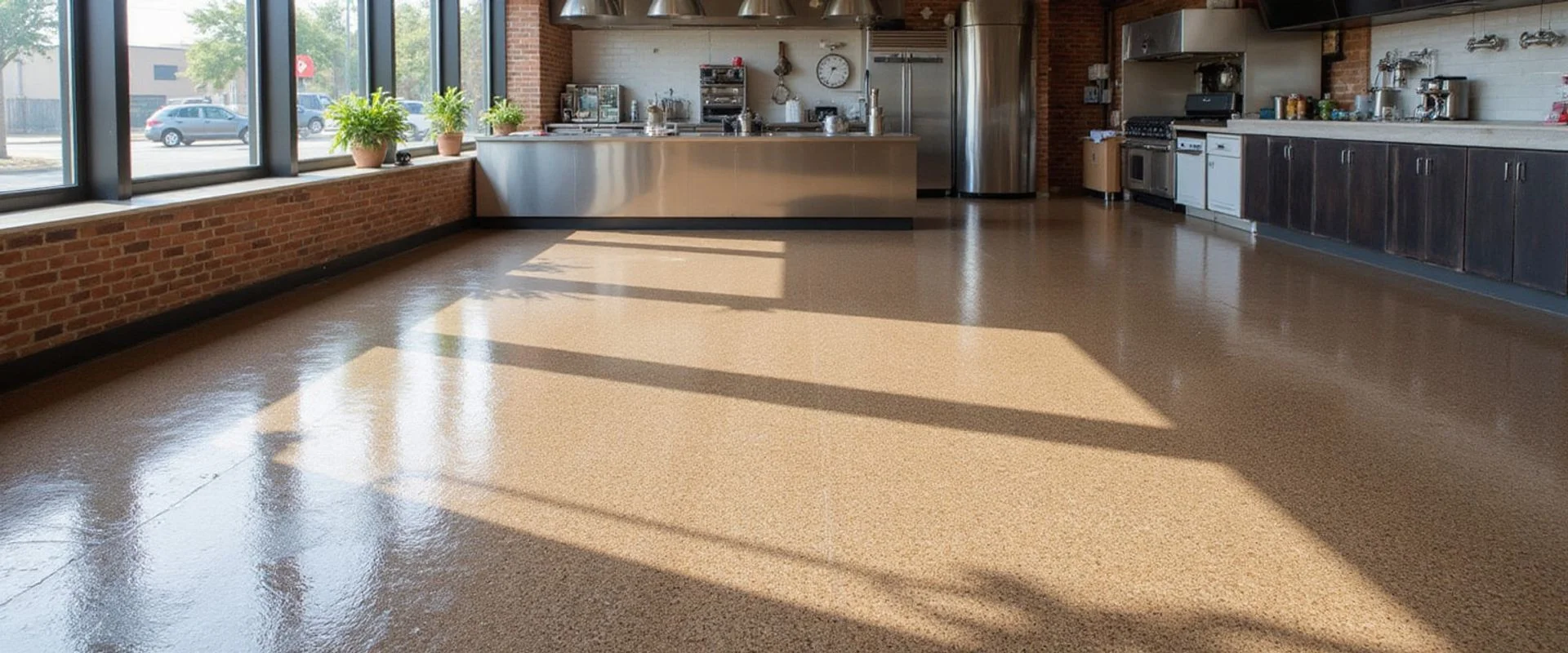
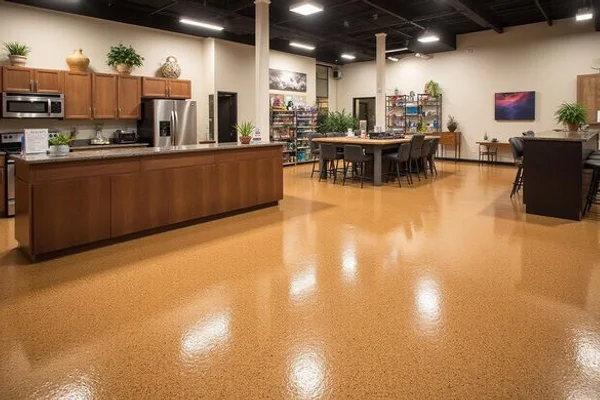
Jason Laxson installs commercial epoxy flooring across Austin for restaurants, warehouses, retail showrooms, auto shops, and medical offices. Every commercial install starts with diamond-grinding prep and uses industrial-grade 100% solids or quartz broadcast systems matched to the traffic and environment. Phased and overnight installs keep businesses running through the project.
Austin Concrete Finishes - owner-operated by Jason Laxson since 2005 - installs commercial epoxy flooring for restaurants, warehouses, retail showrooms, auto shops, medical offices, and breweries across the Austin metro, from Downtown and East Austin to Cedar Park, Round Rock, and the I-35 industrial corridor. Jason does the work himself, not a franchise routing a different crew each time. That means one point of contact from the initial site visit to the final walkthrough, and a contractor who knows the exact state of your floor because he walked it himself.
The commercial epoxy market in Austin runs the spectrum from small neighborhood restaurant kitchens on East 6th Street to 50,000-square-foot distribution warehouses off the I-35 corridor in Pflugerville. Each category has different requirements: a restaurant kitchen needs quartz aggregate for slip resistance and a surface that stands up to nightly hot-water cleaning; a warehouse needs a self-leveling system hardened for forklift traffic. Getting the system wrong is expensive to fix, and it usually means repeating the prep from scratch. Jason does a site assessment before quoting to match the right product to the actual conditions.
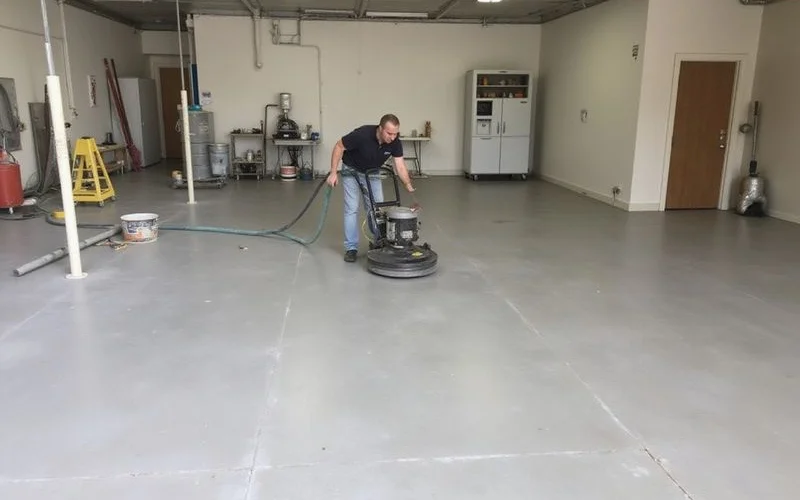
Every commercial install starts with diamond-grinding prep. Commercial slabs in Austin often carry years of contamination - oil, grease, cleaning chemicals, old coatings - that have to be removed before any new system bonds. A mechanical grind to the correct concrete surface profile (CSP 2 or higher per ICRI guidelines) opens the slab and gives the epoxy a structural bond. Skipping that step is why so many commercial epoxy floors fail within two or three years, especially on Central Texas clay soils where slab movement adds stress to any coating system. Austin Concrete Finishes has been doing the prep right since 2005.
Epoxy Systems for Every Commercial Environment
The term commercial epoxy covers a range of systems with different performance profiles. Here is a plain-language breakdown of what Jason installs and where each makes sense.
100% Solids Epoxy
100% solids means there is no water or solvent carrier in the product - the entire liquid volume cures into a solid film at 10-20 mils per coat, far thicker than water-based systems that build at 2-4 mils. For commercial floors that take daily abuse - kitchens, auto shops, medical offices - 100% solids is the standard. It handles chemical spills, rolling loads from pallet jacks and forklifts, and constant foot traffic without thinning out or lifting over time.
Water-based epoxy is available and lower in VOCs, but it is better suited to residential interiors and light-duty commercial settings where traffic is modest and the primary goal is aesthetics. Jason uses water-based systems where the project calls for it, but recommends against them for industrial and food-service environments where durability is the deciding factor.
Quartz Broadcast Systems
Quartz broadcast systems embed aggregate into the wet epoxy layer before it cures, creating a textured surface with built-in slip resistance. This is the standard for commercial kitchens, food-service areas, and anywhere the floor regularly gets wet. The coefficient of friction on a quartz broadcast surface is substantially higher than a smooth epoxy floor, and the texture does not wear off the way anti-slip additives mixed into the topcoat can over time. Austin restaurants and commercial kitchen operators regularly request this system specifically for front-of-house and back-of-house applications.
Decorative Flake Systems
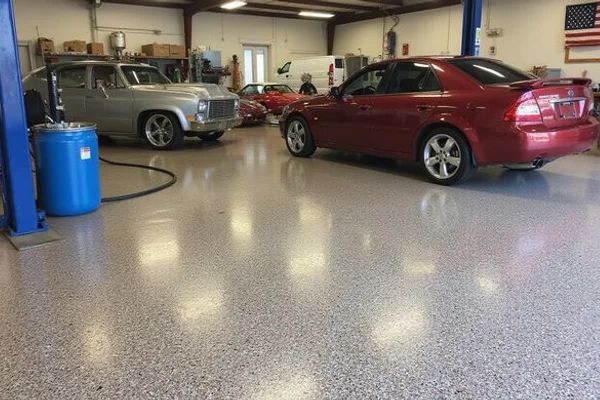
Flake broadcast systems use decorative vinyl chips embedded in the epoxy layer, sealed under a polyaspartic or urethane topcoat. The chips add color and texture, and the topcoat provides the chemical resistance. This is the go-to for auto and mechanic shops across Austin, where visual appeal matters alongside function, and for retail showrooms and service bays where the floor reflects on the business’s overall professionalism. The flake density and color blend is adjustable - from a subtle speckle to a full broadcast that hides wear patterns on a busy shop floor.
Self-Leveling Epoxy for Warehouses
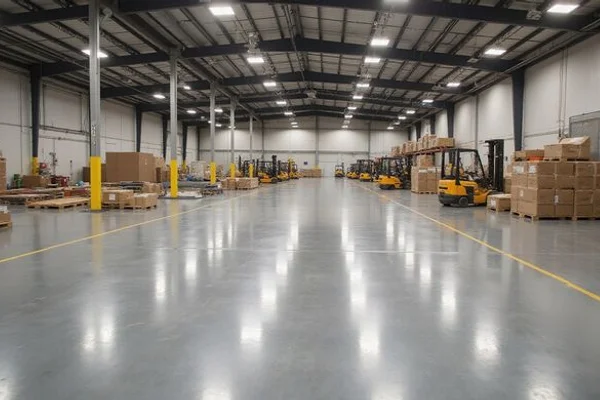
Warehouse and distribution floors often have surface variation, minor high spots and low areas, and wear patterns from years of forklift traffic. A self-leveling epoxy flows into those variations and cures flat, eliminating tripping hazards and the uneven wear that develops over a rough slab. Once cured, the dense surface handles loaded pallet-jack traffic, forklifts, and rolling carts without surface failure. Jason pairs self-leveling systems with a polyaspartic topcoat on Austin warehouse projects to get a faster cure and return the floor to service sooner.
| System | Best For | Slip Resistance | Cure to Light Traffic |
|---|---|---|---|
| 100% Solids Epoxy | Kitchens, medical, general commercial | Moderate (smooth) | 24 hours |
| Quartz Broadcast | Restaurant kitchens, food service, wet areas | High | 24 hours |
| Decorative Flake | Auto shops, retail, showrooms | Moderate to high | 24 hours |
| Self-Leveling Epoxy | Warehouses, distribution, industrial | Moderate (smooth) | 24 hours |
| Polyaspartic Topcoat | All above as finish coat | Same as base | 4 to 8 hours |
Industries We Serve Across Austin
Jason’s commercial epoxy work covers most of the business categories active in Austin’s growth corridor. Here is where he works most regularly, with Austin-specific context for each.
Restaurants, Bars, and Breweries
East Austin, South Congress, and the Rainey Street corridor have some of the most active restaurant and bar construction and renovation in Texas. Owners looking for a floor that holds up to kitchen abuse, front-of-house traffic, and nightly cleaning routinely choose epoxy over tile because the system delivers the hygiene and durability of polished surfaces without grout joints to scrub or regrout. Jason schedules restaurant and bar projects around kitchen hours - most finish in overnight or phased installs so the kitchen stays operational. Domain and South Lamar restaurants typically request quartz broadcast in kitchen areas and a smooth 100% solids system in dining rooms where the look matters as much as function.
Austin’s growing brewery and tasting room scene - concentrated in East Austin and spreading to North Loop and Cedar Park - uses floor systems that handle cold room condensation, keg rolling, and constant cleaning. Jason installs flake or full-aggregate systems in most tasting rooms and quartz broadcast in production and serving areas.
Auto and Mechanic Shops
Austin’s suburban growth has driven auto shop construction hard in Cedar Park, Round Rock, Georgetown, and Pflugerville, where new residential density is being followed by service businesses. Auto shop floors are typically flake systems: the decorative chips show well in customer-facing service bays, and the polyaspartic topcoat resists tire marks, oil, and brake fluid. Jason works with both independent shops and multi-bay service centers. The prep is more involved on shop floors carrying years of embedded oil and grease - the diamond grinder removes it mechanically rather than relying on a chemical degreaser to reach all of it.
Medical and Dental Offices
Austin’s medical corridor along South Mopac and the district near major hospital campuses includes a large and growing number of outpatient clinics, dental offices, and veterinary practices. These spaces need floors that are non-porous, easy to disinfect, and durable under rolling exam tables and heavy equipment. Jason installs 100% solids epoxy with a polyaspartic topcoat on most clinical spaces. The polyaspartic is resistant to the disinfectants used in medical environments and creates a sealed surface with no grout joints or coating seams where bacteria can accumulate.
Retail Showrooms and Commercial Spaces
Retail and showroom floors in Austin’s Domain, Mueller, Lamar Union, and South Congress areas get heavy foot traffic from customers plus rolling display fixtures and delivery carts. The floor needs to look clean and professional, handle the traffic, and be easy to clean between operating hours. Jason installs smooth 100% solids systems with finish options that complement retail environments, or flake systems in showrooms where a more textured, finished look fits the brand. Same-night or weekend install scheduling keeps retail spaces from losing selling days during the project.
Warehouses and Distribution (I-35 Corridor and Pflugerville Industrial Parks)
The I-35 corridor north of Austin, from Pflugerville through Round Rock and toward Georgetown, is one of the fastest-growing industrial zones in Texas. New warehouse and distribution construction is continuous, and existing warehouse operators are upgrading aging slab floors that shed dust and have become liabilities for rolling equipment. Jason installs self-leveling epoxy systems on these projects, often paired with a polyaspartic topcoat to minimize downtime. Dust mitigation is frequently the primary driver: a properly coated and densified slab stops the fine concrete dust that raw concrete sheds daily, reducing cleaning costs and protecting products stored directly on the floor. Facilities in Pflugerville, Hutto, and the growing Buda industrial parks are among the most active areas for warehouse epoxy projects.
From Site Assessment to Final Walkthrough
Site Visit and Slab Assessment
Every Austin commercial project starts with Jason walking the space. He checks for existing coatings that need to be removed, oil contamination, cracks, high spots, and slab movement. The assessment drives the scope: some floors need a full coating removal and grind before the new system goes down; others can be ground and coated in a single pass. Jason flags these conditions at the walkthrough and includes them in the quote rather than discovering them after work has started.
Moisture Testing When Conditions Call for It
Moisture vapor transmission through the slab is a leading cause of epoxy failure - moisture pushes up from below and breaks the adhesive bond. On commercial projects where the slab is over grade, near water features, or has had previous coating failures, Jason performs a calcium chloride or relative-humidity moisture test. If the test shows elevated moisture vapor emission, a moisture vapor barrier is installed before the epoxy goes down. That step is not optional when conditions call for it.
Diamond Grinding Prep
Commercial floors get diamond-ground to a concrete surface profile of CSP 2 or higher. This is a mechanical cut that opens the slab, removes surface contamination, and creates the physical texture the epoxy bonds into. HEPA dust containment runs throughout the grinding phase so that active inventory, kitchen equipment, and staff in adjacent areas are not affected. The grinding phase is typically the most disruptive part of the project; everything after it is coating application and cure time.
Phased Install or Overnight Work
Most Austin commercial projects run in one of two modes. Phased installs divide the floor into sections and work through them sequentially, keeping part of the business operating at all times. This works well for restaurants, retail stores, and offices that can partition the space temporarily. Overnight installs arrive after close, grind and coat the entire floor, and hand it back before opening the next morning. For multi-day projects, the overnight crew works each night until the job is complete. Both modes are standard and priced upfront.
Cure Times and Return to Service
100% solids epoxy reaches foot-traffic hardness within 24 hours under normal Austin conditions. Full chemical cure - where rolling loads and liquid exposure are safe - takes 72 hours. Polyaspartic topcoats cure in 4 to 8 hours and can take rolling loads the same day they are applied. Jason reviews cure expectations with every client before starting so there are no surprises about when the floor is ready for business.
Why Austin Businesses Choose an Owner-Operator
Most commercial flooring installs in Austin go through franchise operations or larger companies that subcontract the work to rotating crews. The owner takes the call, sends a crew, and collects the check. The actual contractor on site may have limited familiarity with the specific systems and site conditions involved.
Austin Concrete Finishes is structured differently. Jason Laxson takes the call, walks the site, specifies the system, and runs the install himself. There is one point of contact from the initial estimate through the final walkthrough. When Jason scopes a project, he is the person doing the work - not describing what a subcontracted crew will do. That means the site visit is actually informative for the project outcome, not just a box to check before sending someone else.
For commercial clients, this matters in practice. Communication about schedule changes, slab conditions discovered partway through the project, or finish decisions goes directly to the person doing the work rather than through a dispatcher. Austin Concrete Finishes carries approximately $4 million in liability insurance and owns all grinding, coating, and dust-containment equipment in-house - the coverage and equipment are on-site because Jason brought them, not because a subcontractor happened to show up with theirs. Commercial references are available for clients who want to speak with other Austin business owners before committing.
With 21 years of decorative concrete work through 2026, Jason has seen the failure modes, knows which systems perform in Texas heat and on Austin’s clay-influenced commercial slabs, and does not spec products he has not worked with extensively.
How Does Austin Concrete Finishes Compare?
| Feature | Typical Provider | Austin Concrete Finishes |
|---|---|---|
| Surface prep method | Chemical etch or light sand | Diamond grinding to CSP 2+ on every job |
| Who does the work | Subcontracted or rotating crews | Owner Jason Laxson on site, start to finish |
| Epoxy system | Water-based or hybrid | 100% solids epoxy with polyaspartic topcoat |
| Dust containment | Basic tarps or none | HEPA-filtered dust containment |
| Scheduling flexibility | Business hours only | Overnight and phased installs available |
| Insurance coverage | Varies | Approximately $4 million liability |
| Experience | Varies | 21 years in decorative concrete (since 2005) |
Request Your Free Quote Today
Call Austin Concrete Finishes at (512) 749-8503 or fill out the quote form below. Whether your project is a restaurant kitchen on South Congress, a warehouse off I-35, or a medical office near Mopac, include the square footage, type of space, and preferred scheduling window and Jason will respond with a full scope and price within 48 hours.
What you get
- ✓ 100% solids epoxy for maximum durability in high-traffic commercial environments
- ✓ Quartz broadcast systems for slip resistance in commercial kitchens and food-service areas
- ✓ Decorative flake systems for auto shops, retail spaces, and showrooms
- ✓ Self-leveling epoxy for warehouses and distribution centers with forklift traffic
- ✓ Diamond-grinding prep on every job for a mechanical bond that holds
- ✓ Phased or overnight installs to keep businesses running through the project
- ✓ HEPA dust containment during grinding to protect inventory, staff, and equipment
- ✓ Approximately $4 million liability insurance coverage for commercial project protection
Real Work
Project Gallery
What Customers Say
Austin Customers on Their Finished Concrete
"Our 20-year-old garage slab had peeling DIY epoxy. They ground it all back, fixed the cracks, and the new flake floor still looks showroom-clean through two Texas summers."
David R.
Round Rock
"The pool deck stays cool enough to walk on barefoot in August now, and it's no longer slick. Exactly what we hoped for."
Sarah M.
Lakeway
"Polished our downstairs floors to a soft satin sheen. Easy to clean, and they clearly did the prep right. No shortcuts."
Elena G.
West Lake Hills
FAQ
Commercial Epoxy Flooring: Your Questions Answered
Can you install commercial epoxy overnight to avoid disrupting our business? +
Yes. Overnight and weekend scheduling is standard for Austin Concrete Finishes commercial projects. Equipment arrives after close, the grinding and coating work runs through the night, and the floor is handed back before morning. For larger spaces, phased installs keep one section in service while another is being coated.
What is the difference between 100% solids epoxy and water-based for commercial floors? +
100% solids epoxy cures to a much thicker, denser film than water-based systems and handles heavy foot traffic, rolling loads, and chemical exposure better. Water-based epoxy is thinner and better suited to light-duty applications. For most Austin commercial projects, Jason uses 100% solids systems as the base coat, sometimes paired with a polyaspartic topcoat for faster cure.
What epoxy system do you use in commercial kitchens? +
Commercial kitchens get a quartz broadcast system over a 100% solids epoxy base. The quartz aggregate provides the slip resistance required in a wet kitchen environment and creates a surface that holds up to hot-water cleaning, dropped cookware, and constant foot traffic. An anti-microbial additive can be included on request.
How long before a commercial epoxy floor can handle forklift traffic? +
Most 100% solids epoxy systems reach light foot-traffic hardness within 24 hours. Full chemical cure, where forklift and pallet-jack traffic is safe, typically takes 72 hours. When the schedule demands faster turnaround, polyaspartic topcoat systems cure in 4 to 8 hours and can handle rolling loads the same day.
How much does commercial epoxy flooring cost in Austin? +
Pricing is custom and project-based (2026 rates) depending on square footage, slab condition, the system chosen, and scheduling requirements such as overnight or phased installs. Quotes are free and Jason typically responds with a full scope and price within 48 hours after a site walkthrough.
Are you licensed and insured for commercial epoxy work in Austin? +
Texas does not require a state contractor license for this type of work, which Jason has confirmed. Austin Concrete Finishes carries approximately $4 million in liability insurance and owns all of its diamond-grinding and coating equipment in-house.
How long does a commercial epoxy flooring project take in Austin? +
Most Austin commercial epoxy projects run 2 to 5 days depending on square footage, slab condition, and the system specified. A 2,000-square-foot restaurant kitchen typically runs 2 to 3 days. Larger warehouses or retail floors in the 5,000 to 10,000 square-foot range run 3 to 5 days. Slab conditions identified at the walkthrough are factored into the schedule before work begins.
Do you install commercial epoxy floors in medical or dental offices? +
Yes. Medical and dental offices are a regular part of Jason's commercial work. The typical system is a 100% solids epoxy base with a smooth, non-porous finish and a polyaspartic topcoat sealed against hospital-grade disinfectants. No grout joints, no coating seams, straightforward to sanitize.
Related Services
Ready to Quote Your Commercial Epoxy Flooring?
Send a photo of the slab — we usually have a real number back to you the same day.