Guide
What Is a Polyaspartic Coating?
Polyaspartic is an aliphatic polyurea that cures fast, blocks UV, and resists abrasion. The decorative coating built for outdoor concrete.
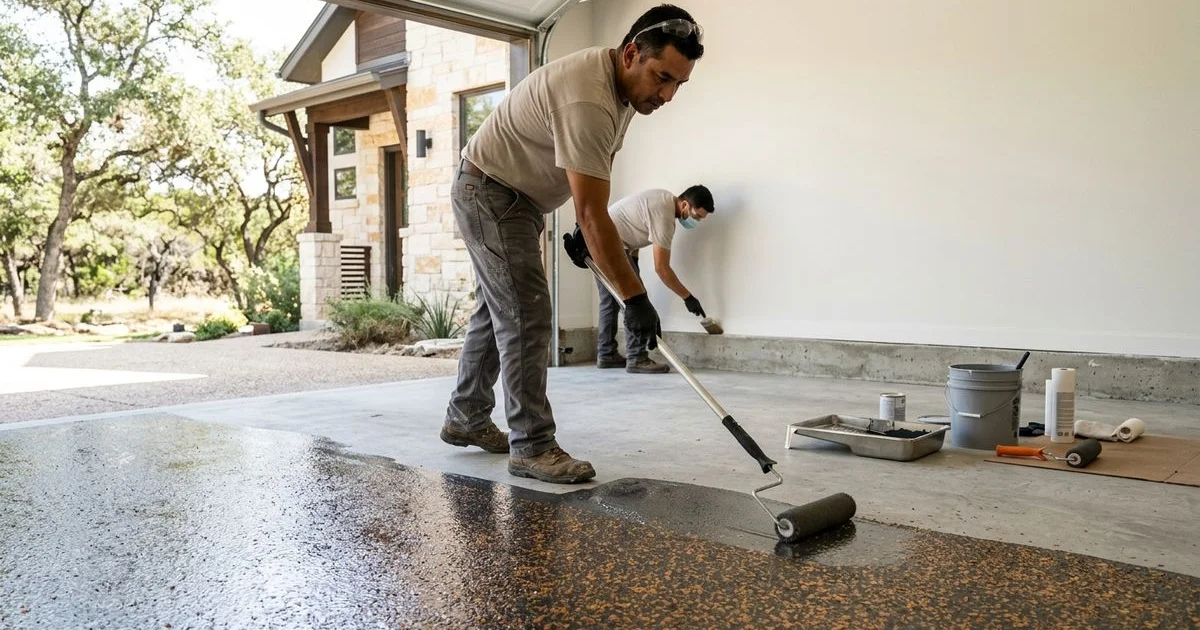
A fast-curing, UV-stable coating chemistry
Polyaspartic Coatings belong to the polyurea family — specifically aliphatic polyurea, engineered for decorative coating use. Two-part chemistry, fast cure, UV stability, and high abrasion resistance are the headline properties.
The “fast cure” matters more than you’d think. Polyaspartic can go from liquid to walk-ready in a few hours, which lets us do a complete single-day install on a residential garage. For commercial spaces that can’t afford multi-day downtime, this is huge.
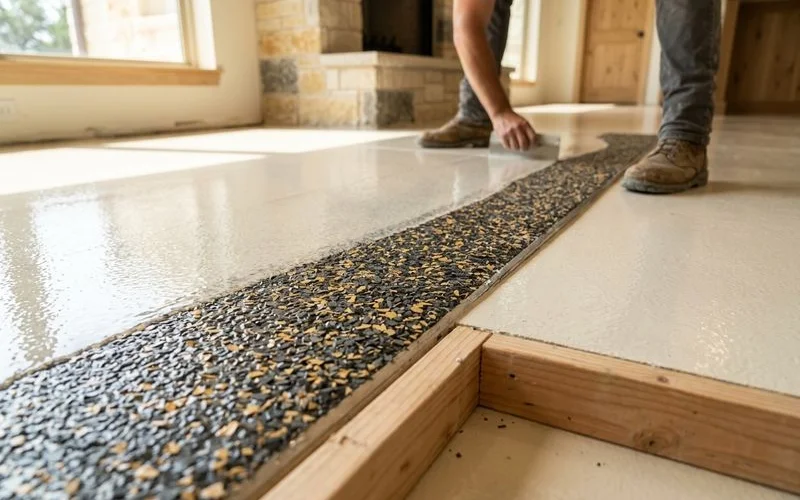
What polyaspartic does that epoxy doesn’t
Three things:
- UV stability. Polyaspartic doesn’t yellow. Standard epoxy does, especially under Texas sun through a garage door.
- Fast cure. Same-day finish is possible. Epoxy needs days of cure.
- Higher abrasion resistance. Polyaspartic survives more wear before showing dull spots.
The trade-off is cost — polyaspartic runs 1.5x to 2x the price of standard epoxy resin. The fastest, cheapest way to get its benefits is as a clear topcoat over a flake-epoxy basecoat. The epoxy gives color and bond; the polyaspartic gives UV protection and speed.
That combined system is what we install most often in Austin. The combination of cost, look, and durability is hard to beat.
Frequently Asked Questions
Is polyaspartic the same as polyurea? +
Yes, technically — polyaspartic is a specific aliphatic polyurea engineered for coatings. Aliphatic chemistry is what gives it UV stability.
How fast does it cure? +
Walk-on within hours, drive-on within 24, full chemical cure in days. Much faster than standard epoxy.
Why not always use it? +
Cost. Polyaspartic is more expensive than epoxy. For fully indoor light-traffic garages, epoxy alone may be enough.
Related Service
Learn more about Polyaspartic Coatings
Fast-curing, UV-stable polyaspartic and polyurea coatings.
View Polyaspartic CoatingsRelated Guides
Polyaspartic vs Epoxy: Which Lasts Longer Outdoors?
Polyaspartic wins outdoors. Standard epoxy yellows and breaks down under UV. Here's the realistic outdoor lifespan of both.
Why Polyaspartic Holds Up to Texas UV and Heat
Aliphatic polyurea chemistry keeps polyaspartic color-stable under Texas sun. Here's the science and what it means for your floor.