Guide
Why Polyaspartic Holds Up to Texas UV and Heat
Aliphatic polyurea chemistry keeps polyaspartic color-stable under Texas sun. Here's the science and what it means for your floor.
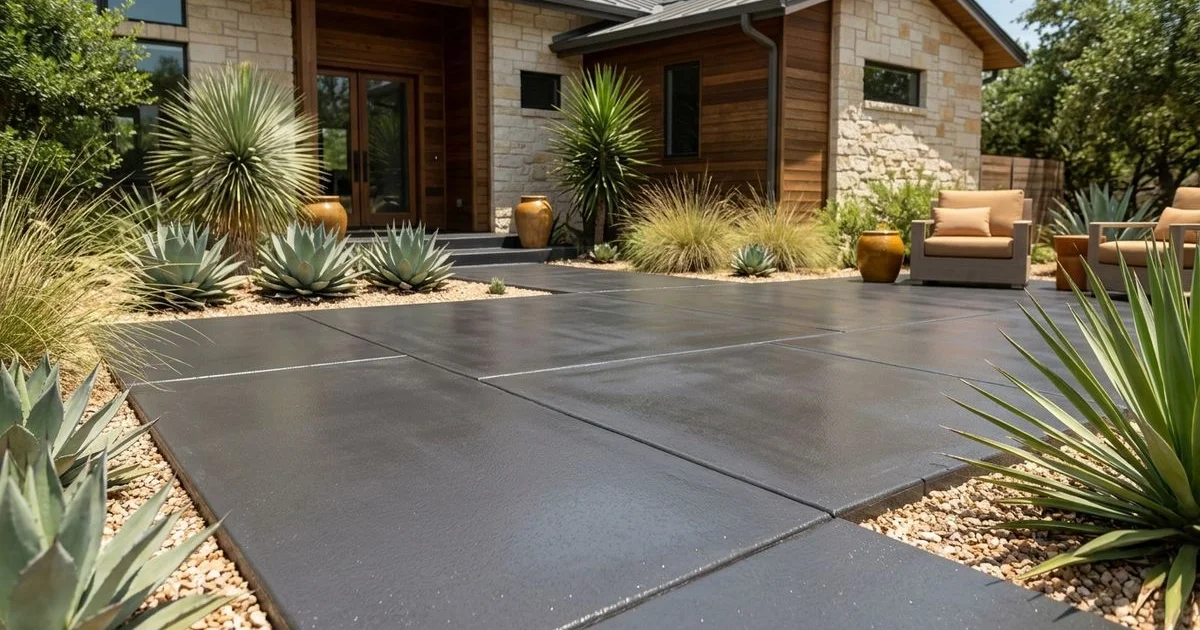
Aliphatic chemistry blocks UV
Polyaspartic Coatings are aliphatic polyurea — and that “aliphatic” prefix is doing real work. Aromatic polyureas (which include standard epoxy) absorb UV and break down chemically, which is what yellowing looks like. Aliphatic chemistry doesn’t absorb UV the same way, so the coating stays color-stable for decades.
In Texas terms, that means the coating in your garage stays the original color even when the south-facing door is open all afternoon. The pool deck holds its tint through August. The patio doesn’t fade.
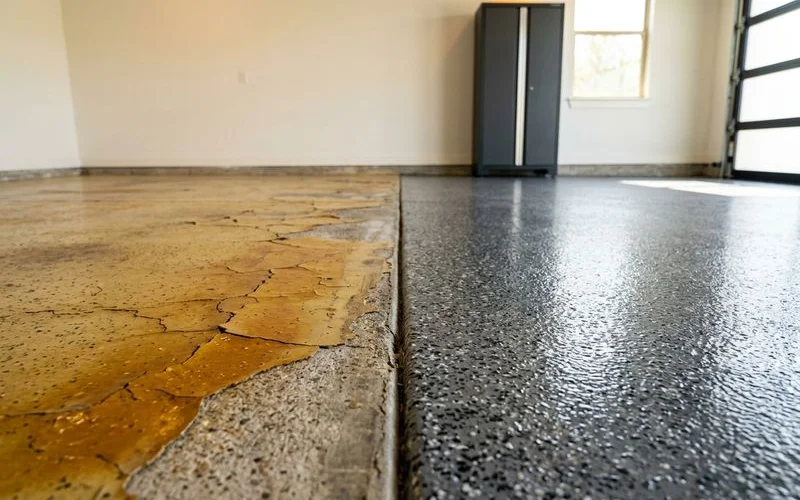
What that matters for in practice
Three real-world implications:
- Garages with sun exposure keep their color. The flake floor near the door doesn’t fade differently than the floor at the back.
- Pool decks retain heat-reflective light colors longer, which keeps surface temps lower under Texas sun.
- Outdoor patios stay decorative for years between resealings instead of fading and needing recoats.
Polyaspartic also resists abrasion better than standard epoxy, which is why high-traffic commercial floors and garages benefit from it as a topcoat. The combined effect is a floor that holds up to both the Texas sun and the daily wear of real use.
If your project is outdoors or sees direct sun indoors, polyaspartic is almost always the right call.
Frequently Asked Questions
Does polyaspartic ever yellow? +
Quality aliphatic polyaspartic doesn't yellow under normal sun exposure. Lower-grade products may haze over many years.
Is it heat-resistant on outdoor surfaces? +
Yes — it stays bonded and color-stable under Austin afternoon sun. Standard epoxy can soften and yellow under that heat.
How does it compare to a UV-stable epoxy? +
UV-stable epoxies exist but are less common and typically pricier. Polyaspartic is usually the practical UV-stable choice.
Related Service
Learn more about Polyaspartic Coatings
Fast-curing, UV-stable polyaspartic and polyurea coatings.
View Polyaspartic CoatingsRelated Guides
Polyaspartic vs Epoxy: Which Lasts Longer Outdoors?
Polyaspartic wins outdoors. Standard epoxy yellows and breaks down under UV. Here's the realistic outdoor lifespan of both.
What Is a Polyaspartic Coating?
Polyaspartic is an aliphatic polyurea that cures fast, blocks UV, and resists abrasion. The decorative coating built for outdoor concrete.